by Anne Page | Aug 9, 2016 | SLP Like a Boss
In this series I’m interviewing SLP boss women who work by day as a speech language pathologist, but at night (and on weekends) they are building a business. I’m talking about websites, blogs and therapy materials for their fellow SLPs and teachers. These are women I admire professionally and who inspire me. I write this series because I feel we can all make our practice as SLPs better and stronger by connecting with other SLPs. [spacer height=”20px” id=”2″]
This summer I was so thrilled to meet Nicole Allison in Florida at the Teachers Pay Teachers Sellers Conference. Nicole has been listed by many other SLP bosses as truly inspirational and she lives up to her reputation. Not only are Nicole’s therapy materials thoughtfully created, they are evidence based and many are linked to Core Curriculum standards. Her blog features inspiring articles and helpful resources for the busy SLP. [spacer height=”20px” id=”2″]
Let’s jump right in and get to know her better.[spacer height=”20px” id=”2″]
Tell me about yourself in seven words: Blessed, mommy, clumsy, quiet, author, coffee-addict [spacer height=”20px” id=”2″]
Where did you go to grad school?: I went to the University of Akron in Ohio. Go Zips! [spacer height=”20px” id=”2″]
What are your top three SLP must haves (other than your own amazing materials)?:
I would say every SLP needs to invest in a good old fashioned generic game (one that can be played with just about every student such as Candy Land, Trouble, or Jenga), a laminator (because we all know that if we CAN laminate something, it WILL get laminated). And last coffee-even better-a Keurig machine for your office :)[spacer height=”20px” id=”2″]
What do you love most about what you do?
Oh man, these are the hard questions, Anne! I lf I HAVE to narrow it down to one, I would say I absolutely LOVE that I can be a positive influence on my students. So many times, our reach extends beyond “artic, language, and grammar.” We can truly make a difference and be a light in our students’ lives. That student you thought you were getting nowhere with all of a sudden gives you a hug at the end of the year or my group of girls that told me when they grown up they want to be “speech teachers” just like me. Those moments melt my heart and keep me coming back for more. [spacer height=”20px” id=”2″]
Tell me your advice for the newly minted SLP: My number one piece of advice is to befriend a few teachers. Being the only SLP at my district I often felt isolated. Being an introvert didn’t help matters. Stretch yourself by eating lunch with teachers and truly listen to them. Often they know a lot about our students and can be a HUGE help to us! [spacer height=”20px” id=”2″]
Tell me about your blog:
Lol where do I even start! I starting blogging back in 2012 because, like I said, I was the only SLP at my district and I NEEDED support. For REAL friends-I probably wouldn’t have survived without the support I found through blogging! I want my blog to be a safe haven for other SLPs. A place they can come and truly feel rejuvenated about our profession and walk away with fresh ideas and resources. [spacer height=”20px” id=”2″]
Tell me about your TPT store:
TPT came about because of the encouragement of my husband. I started blogging with no intention of making or selling resources. I remember the summer I spent SEVERAL hours making my Common Core aligned goals. I created it because I needed it. My husband was the one who said, “Well, if you need it, maybe others do too.” Since then, that’s been the whole philosophy behind my TPT store. I create out of a need for my own students and hope others can benefit from as well! [spacer height=”20px” id=”2″]
What SLP-boss inspires you? Just one?! I have sooo many that I truly look up to! I saw Jenna’s Speech Room News way back when and said “THAT’s want I want to do!” but I would also say Lauren LaCour from Busy Bee Speech. This girl truly walks the walk when it comes to her relationship with Christ. It’s a beautiful thing when you can find that special friend who pushes you in your own faith. [spacer height=”20px” id=”2″]
What is your favorite children’s book?
I LOVE Fancy Nancy books so much so that I even own the Fancy Nancy doll lol! They are the best for working on vocabulary while still having relatable stories. [spacer height=”20px” id=”2″]
What about picture books? I really like the book (and so does my toddler) “A Ball for Daisy.” It’s perfect for working on story-telling and interpreting emotions. I always reach for books that you can incorporate multiple goals into! [spacer height=”20px” id=”2″]
Isn’t she great? Thanks Nicole for all you do for our profession.I’m so glad I got to meet you and am looking forward to connecting again soon. ( And I think we should all thank her husband for encouraging her to get started on TPT.) [spacer height=”20px” id=”2″]
Be sure to follow
Nicole’s blog and check out her
TPT store by clicking on these links.[spacer height=”20px” id=”2″]
Until next week,[spacer height=”20px” id=”2″]
P.S. I wrote a guest blog post for Nicole about stepping outside of our four walls as SLPs
click here to read.

by Anne Page | Jul 31, 2016 | Sales, Therapy Materials and Ideas, TPT Products, Uncategorized
Attention SLP shoppers!
The Teachers Pay Teachers big Back To School sale is August 1 and 2nd. With 20% off, you don’t want to miss this! Plus you get an additional 8% off when you use the promo code BESTYEAREVER.[spacer height=”20px” id=”2″]
It’s time to get strategic about your TPT therapy materials. What’s really going to help you this year and for the years to come? Let me help you find must have items for your SLP bag of tricks. Here are some great materials to get you started from my store. I have no doubt you’ll find yourself reaching for these year after year.[spacer height=”20px” id=”2″]
” I love the organization/layout of this product. I know it will benefit many of my students! Thanks for including the Reading Comprehension stories – my teachers love that I integrate reading in speech all the time!” Buyer[spacer height=”20px” id=”2″][spacer height=”20px” id=”2″]
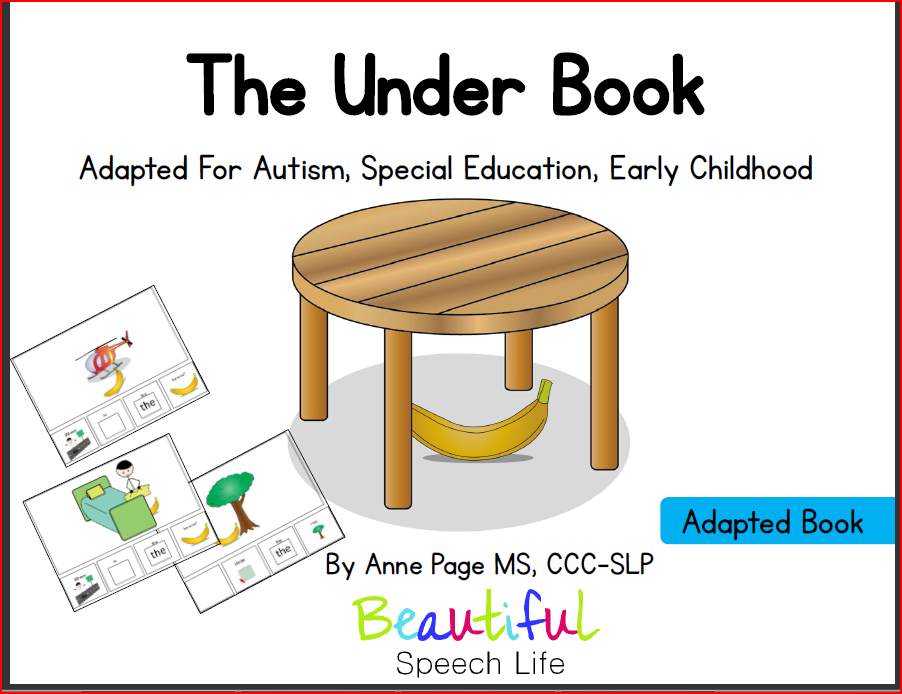
“I am so excited about this book! I have several students who are working on positional concepts and it just takes so many repetitions to learn the concepts. I love that this book is full of repetitions. I am looking forward to more in the future!” Buyer[spacer height=”20px” id=”2″]
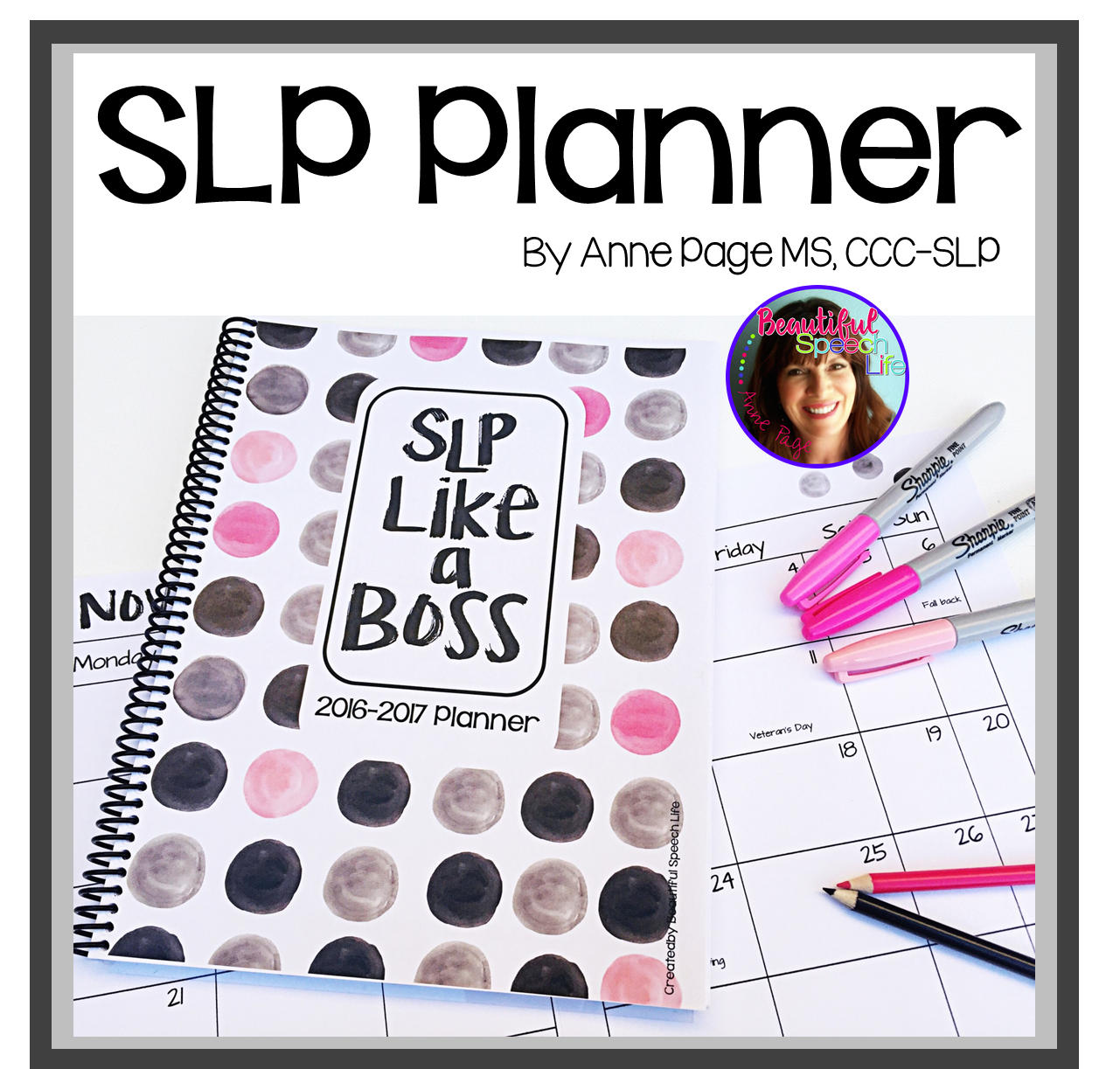
“While I haven’t started my job yet (countdown to my CF position!), I love this planner so far! It looks great, even with my black and white only printer. I love the extra documents (such as the Parent Communication Log).” Buyer[spacer height=”20px” id=”2″][spacer height=”20px” id=”2″]
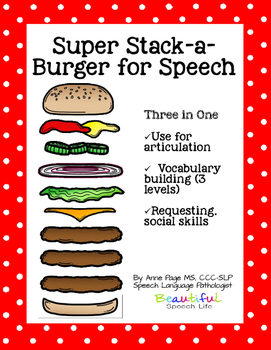
” This is such a fun and engaging activity! I appreciate you including the different levels of difficulty. Thanks!” Buyer[spacer height=”20px” id=”2″]
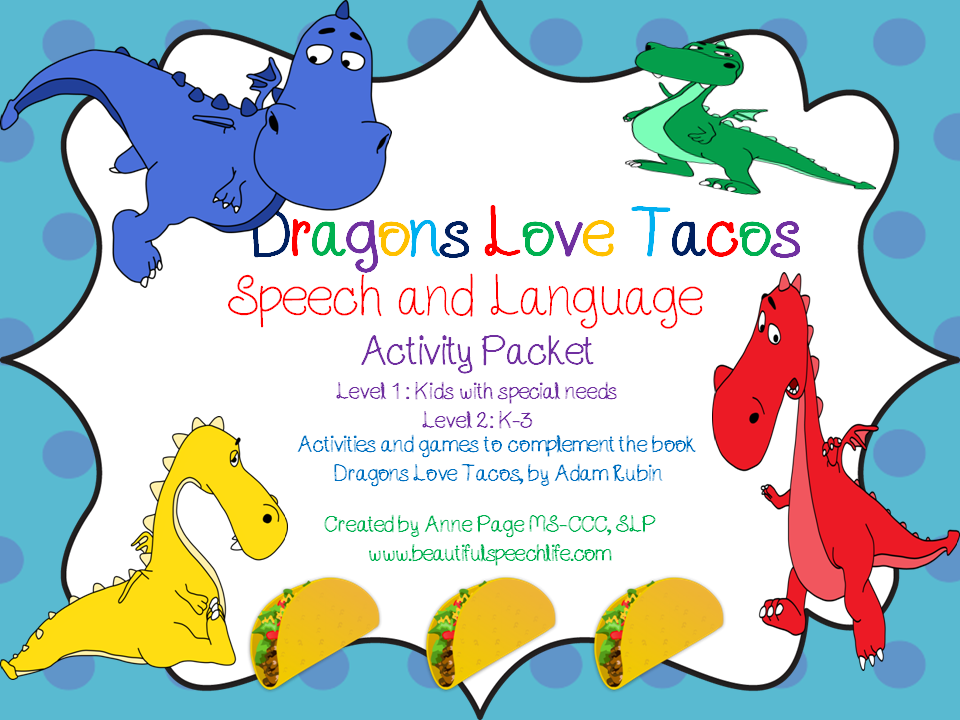
” So many of my younger students love anything that has do to with dinosaurs…and who doesn’t love tacos? 🙂 I love this book, but am even happier that such a thorough, applicable and fun speech therapy product was created for it! Thank you so much” Buyer[spacer height=”20px” id=”2″]
And here’s what’s in my cart, I personally know all of these sellers and am really excited to add more of their wonderful materials to my collection.[spacer height=”20px” id=”2″]
[spacer height=”20px” id=”2″]
Happy shopping my friends and here’s to THE BEST YEAR EVER!

by Anne Page | Jul 6, 2016 | Blog, Inspiration, SLP Like a Boss
What?![spacer height=”20px” id=”2″]
I want you to think about the school year during summer?[spacer height=”20px” id=”2″]
Yes I do. Just hear me out for a minute. Don’t worry, I still want you to enjoy your summer.[spacer height=”20px” id=”2″]
Summer is a time I always look forward to. Two months off to relax, regroup, travel and even do a little planning. Did June fly by for you too?[spacer height=”20px” id=”2″]
However, just taking a little time now to reflect on what worked for you last year will help you continue that trend. Did some new therapy materials get amazing results? Or did you find a new organization tool? You want to keep that good stuff going.[spacer height=”20px” id=”2″]
Take a moment right now. Close your eyes and think about going back to work. What’s the first thing you think of that fills you with dread? Or that gives you that “oh yuck” feeling? You know, that activity that you wish you could pay someone to do for you?[spacer height=”20px” id=”2″]
Really, I’m not trying to bring you down. I’m suggesting you take a look at what you can do to make it better.[spacer height=”20px” id=”2″]
I’ve been chatting with a lot of other SLPs this summer. Here’s a sampling of what some of you said when asked about professional roadblocks:[spacer height=”20px” id=”2″]
“It can get bit crazy with the testing and paperwork that is required. You feel like time is being taken away from your students.”[spacer height=”20px” id=”2″]
“[I have a] hard time finding the balance between paperwork and making sure my kiddos get the attention they need.”[spacer height=”20px” id=”2″]
“…lack of time.”[spacer height=”20px” id=”2″]
Hands down lack of time and too much paperwork were the biggest obstacles.[spacer height=”20px” id=”2″]
I know it can be overwhelming at times. So what I’m suggesting is that you take a little bit of your down time, even if you’re just making some mental notes from your beach blanket, to put some systems into place that will make the coming school year run more smoothly.[spacer height=”20px” id=”2″]
During the next few weeks, we will explore some systems and thought processes that will help you free up your time. So you can get your school year running smoothly and spend more time doing what is really important to you…spending time with your students and making a difference in their lives.[spacer height=”20px” id=”2″]
We’ll explore it all from IEP’s to scheduing to progress reports to billing.[spacer height=”20px” id=”2″]
But for now, let’s start off nice and easy with a thought provoking question…[spacer height=”20px” id=”2″]
What is your why?[spacer height=”20px” id=”2″]
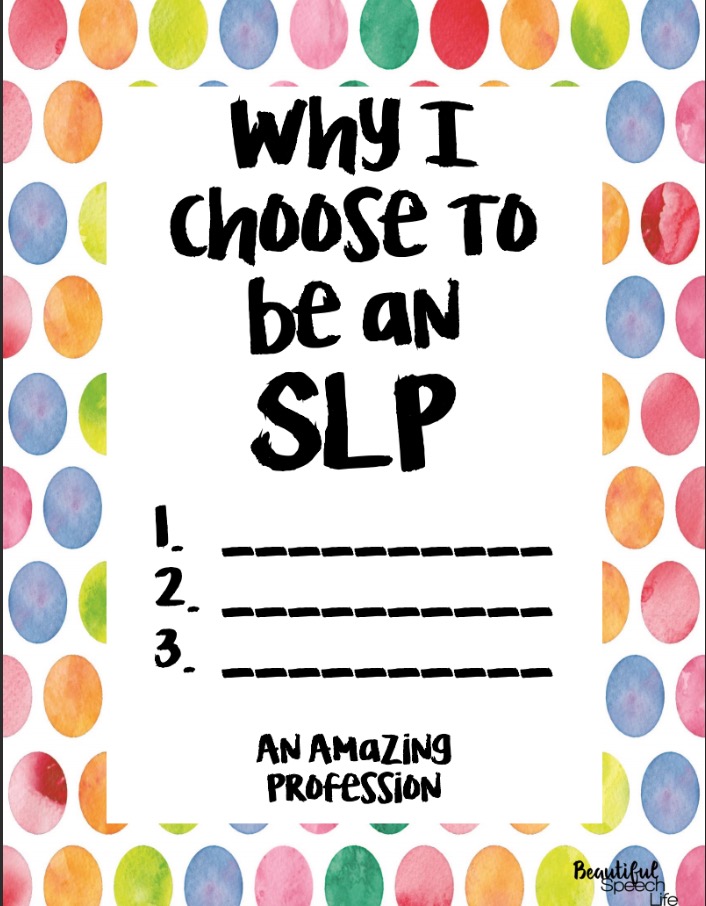
Think back to why you chose to be an SLP. Specifically a school based SLP. What are your top three reasons? Really think about it and dig deep. Don’t let yourself off the hook with “I don’t know”, this is important. Are the reasons still the same? What results do you want? You can do this, it doesn’t need to be perfect; you just need to be clear.[spacer height=”20px” id=”2″]
Here’s my example just to get you started. My top three “why’s” are:[spacer height=”20px” id=”2″]
- Connectedness. Making the world a little better place than when I got here (lofty, I know)
- Independence. (I like having a lot of autonomy to make my own decisions)
- Diversity. I love how diverse the profession is, with the continuous learning curve.
- Honestly, salary and vacation time does have something to do with it; I’m pretty happy with mine, considering the amount of time I have off.
- Creativity/Play. Helping my students learn through play and creativity is another aspect of the job that I really love. [spacer height=”20px” id=”2″]
(I know that’s more than three, I’m having a tough time narrowing it down.)[spacer height=”20px” id=”2″]
So here’s your “homework”… figure out your top three reasons for being an SLP. I’ve created a few fun worksheets for you to help get you started, just click on the image below.[spacer height=”20px” id=”2″]
Stay tuned for next week, when you’ll figure out how to get more of what you want (from your 3 things list) and remove some of the obstacles.[spacer height=”20px” id=”2″]
SLP Like a Boss,[spacer height=”20px” id=”2″]
by Anne Page | Jun 13, 2016 | AAC, Autism, Therapy Ideas
Last week I shared 3 tips on how to AAC Like a Boss. They were:
- You don’t have to know everything
- Be Resourceful
- You don’t have to start high-tech
To continue along this line, today I want to talk a little bit about how I used all three of these tips to make a breakthrough for one of my students.
I’ve been doing group therapy with students who are working on functional communication for the past nine years. I don’t know about you, but I get really discouraged when my students don’t make progress. However, I think I was setting the bar too high too soon. Of course I want them to be able to communicate their wants and needs. There are just so many little steps to getting there; it can take a really long time!
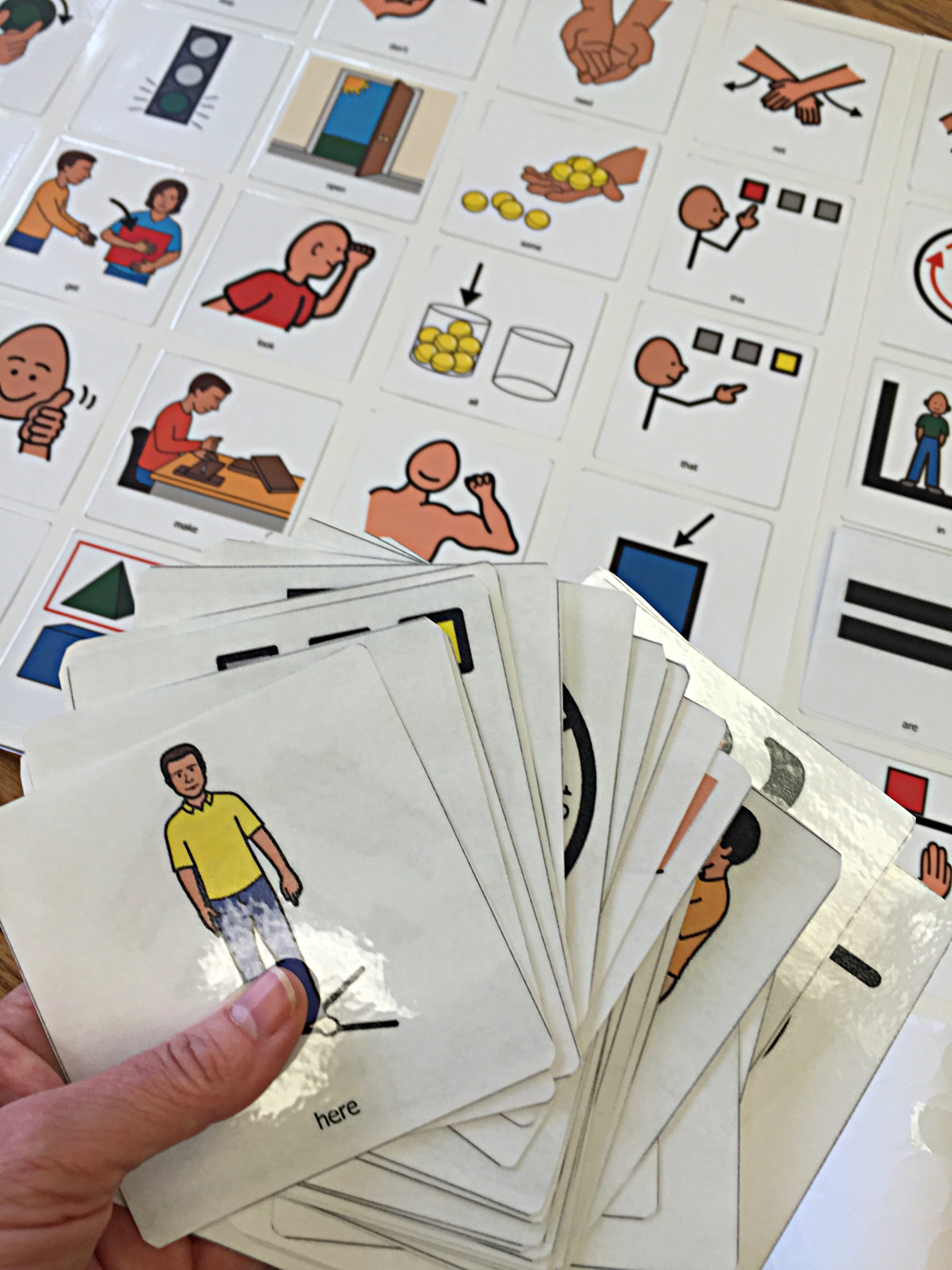
This year I started using The Dynamic Learning Map Core Vocabulary; a list of 40 words that have been proven to be most effective socially and academically for students with significant cognitive disabilities. Developed at the Center for Literacy and Disability Studies at The University of North Carolina at Chapel Hill, these 40 words are based on AAC research.
My Core Vocabulary Board
This is both low tech and resourceful. Plus I really didn’t know everything about it, but I did do my research and know that it’s backed by evidence. I made a core vocabulary board for my room and decided to see what happened.
Let me tell you a little story to illustrate my point. I’ve been working with a little guy, let’s say his name is Benjamin (it’s not) for the last four years. Benjamin came to our school as a kindergartener with a diagnosis of Autism. He was nonverbal. His IEP from preschool had a following one step directions goal and an expressive language goal to “communicate his wants and needs using total communication”.
For the first two years, Benjamin had to learn to follow classroom routines and follow directions. His sensory integration needs were high and we were trying to figure out how to meet them. I felt like a total failure as an SLP. He didn’t say words, he didn’t use signs, and he didn’t have joint attention. He stayed in his own little world. But, he did learn to follow simple directions with visual and verbal prompts.
We have a little farm at our school and Benjamin was really interested in the animals. It was motivating and calming to him to be able to watch them. Soon he started labeling them. His parents bought him little plastic animals and taught him the names of over 100 animals. Progress, sort of. He still didn’t greet, comment, request or command. There was no joint engagement or joint attention. No pointing. He was just naming the animals for his own benefit. Not looking to see if we were listening, not wanting to share his discovery. If he couldn’t physically go get what he wanted, he would guide an adult’s hand to the item. Benjamin demonstrated echolalia and a lot of screaming.
Then we he was in second grade we taught him to request by labeling. We used beads, which he loves to roll and toy animals, which he loved to line up. I was able to get some eye contact by holding the item he wanted by my eyes. He had to look at me and say what he wanted. After a while, we (me, the paraprofessionals, the teacher and his parents) got him to add “I want” but he needed a verbal prompt each time.
Benjamin got an iPad with TouchChat that he was able to use but he hasn’t been too interested in it.
This past school year, he changed classrooms and it took a good four months for him to settle into the new routine. His communication progress was at a standstill. Actually, he even regressed.
I was so sad. I had just told his mom that I wasn’t making any progress with him in group therapy sessions. He was falling asleep, or hanging off of his chair or screaming; sometimes all three in one session. The other kids were so distracted. I made arrangements to see him for individual therapy for a while.
The next day, Benjamin’s teacher forget to tell the aides about the new schedule and they brought him to my room with the group. I said, okay let’s just try one more time.
I was introducing the new core vocabulary board I made and planned to teach the command “go’ through the use of the picture symbol. I set up a little miniature bowling game on the table. I noticed I had Benjamin’s attention, so I let him go first. Big Therapy Win! He participated with minimal prompts for the first time ever. He loved the Core Vocabulary Board with the bowling. In this picture, he’s waiting, holding the ball until we (his classmates and I) say “go”. We had joint attention, joint engagement with PEERS, and smiling. I wish I would’ve filmed it.
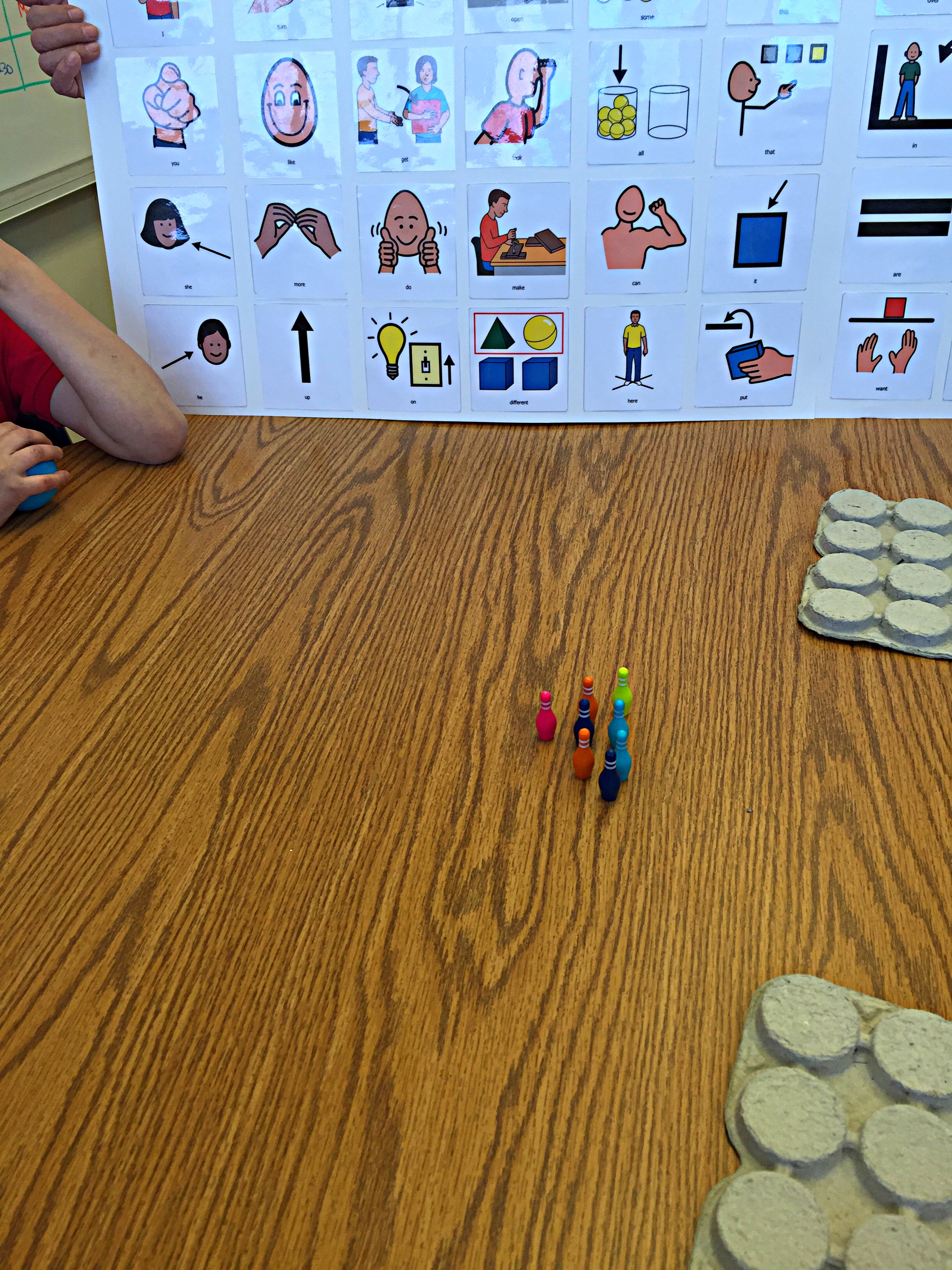
Therapy Win!
That was in January. Ever since then, he’s been participating. I keep the sessions really active with pop-up toys, wind-up toys and balls. So far he’s learned “go”, “stop”, “want”, “more”, and “I”. In April, he was able to put together this sentence “I want more go” using the picture cards and verbalizing. So exciting!
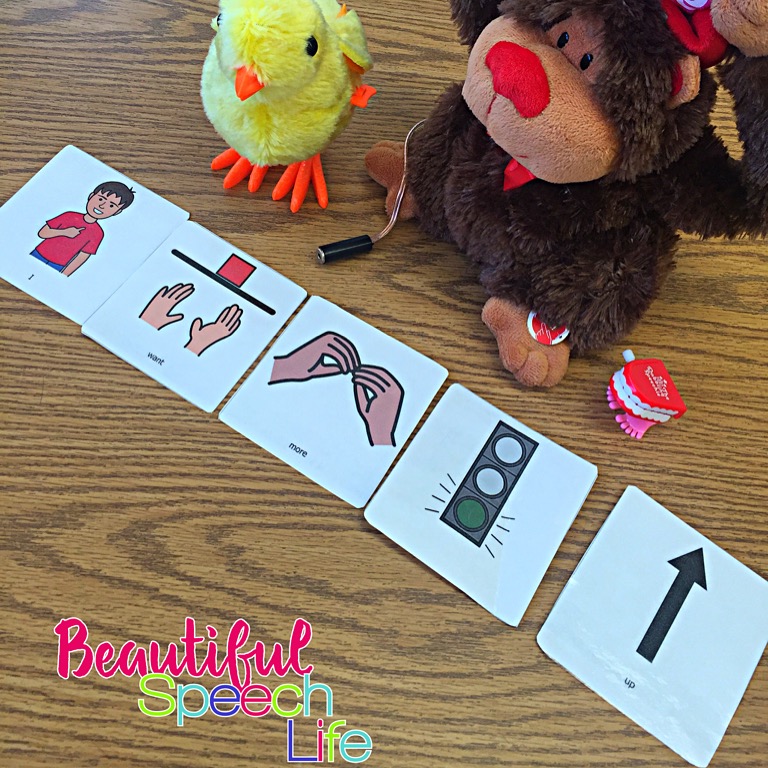
Core Vocabulary
What is it that worked? I believe it was a combination of timing, high interest activity and the Core Vocabulary visuals.
I am really looking forward to seeing what is the next step for my friend Benjamin.
So my point is…Patience Grasshopper.
We have to keep trying new approaches. I knew Benjamin was really visual and had tried some pictures before with little success. The Core Vocabulary words are immediately applicable and they can be used for fun, functional communication.
I really encourage you to try using DLM Core Vocabulary Words. As I learn more about this, I will definitely share the information with you all. I made a little cheat sheet and resource guide for you to help you get started. I know it can be a little overwhelming when you start out, so I streamlined it for you.
Until next time…SLP Like a Boss,
Anne
If you are looking for help with core boards, then download your condensed guide to core boards by clicking the green box. You’ll find links to popular AAC boards, along with tips to get started.

by Anne Page | Jun 1, 2016 | AAC, SLP Like a Boss, Technology, Uncategorized
Last day of school…ah! Such a great feeling.
That was a week and a half ago. I was end-of-the-year-marathon tired. But now I’m feeling refreshed and re-energized. I want to look back on the school year while it’s still fresh in my mind.
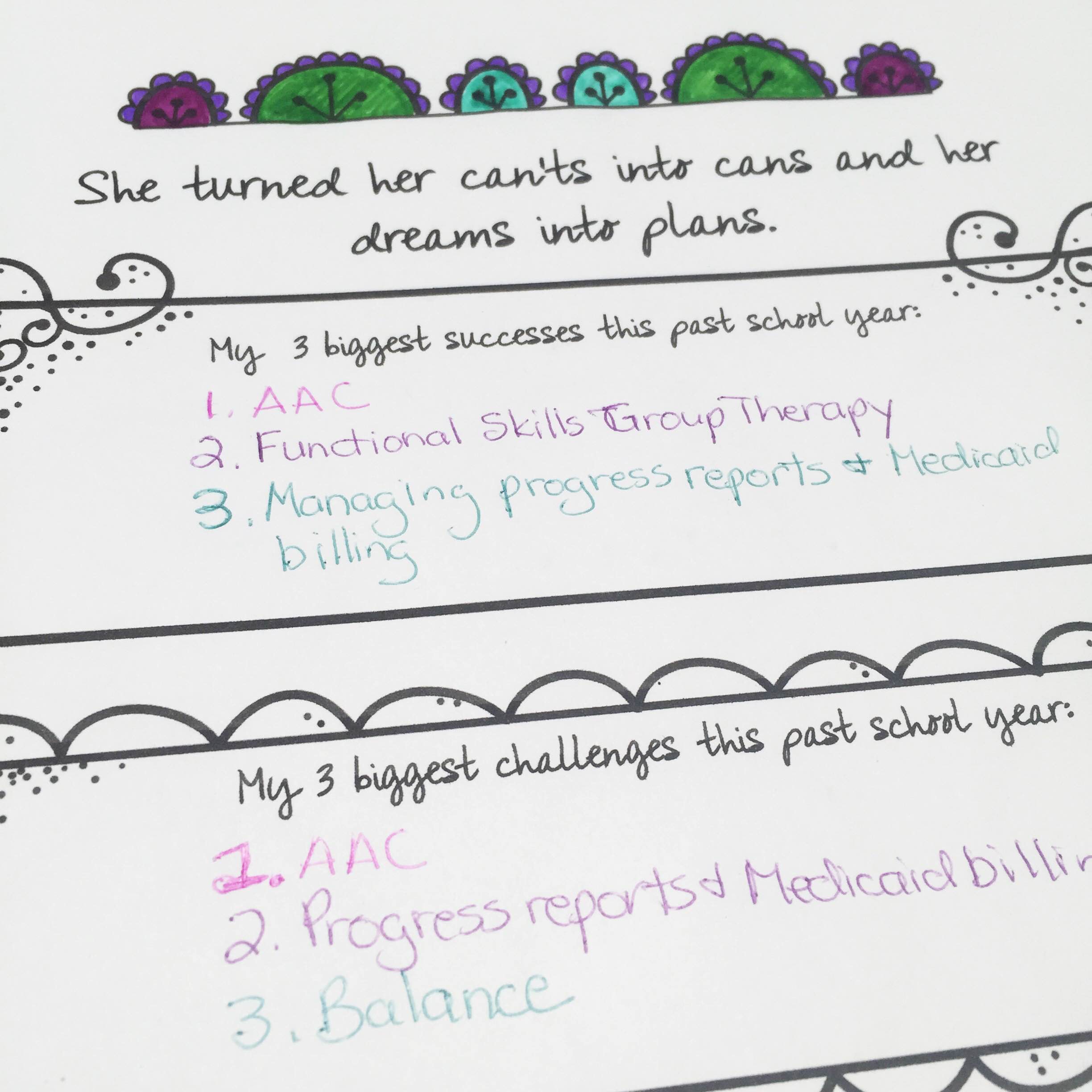
Year End Review Calendar Page
One thing that was really new for me was being the lead for the newly formed Assistive Technology Team for our district. I learned a lot from that and had to push myself to try some things I really wasn’t sure about. Today, I’m sharing three tips for how to AAC Like a Boss, even when you’re a beginner.
TIP #1 You don’t need to know EVERYTHING at first
I learned very quickly just because I’m the lead, it doesn’t mean I have to know everything. I think I had “Imposter Syndrome” for a little while. Have you heard of that? It’s when you think you’ll be exposed as a fraud because you’re just not good enough. Harsh right? Sometimes I’m my own worst critic.
What I figured out is that I don’t have to know everything there is to know about AAC and assistive technology. I don’t have to have all the answers right away, I just need to be willing to find them. Within the online SLP community there are some amazing resources. Dr. Carole Zangari’s award winning blog Praactical AAC is a gold mine of information. Susan Berkowitz at Kidz Learn Language is really helpful with her blog as well. Both of these SLPs truly AAC-like-a-boss and are so forthcoming in helping their fellow SLPs. Another great resource where you can ask specific questions is the Facebook group AAC for the SLP.
TIP #2 Be Resourceful
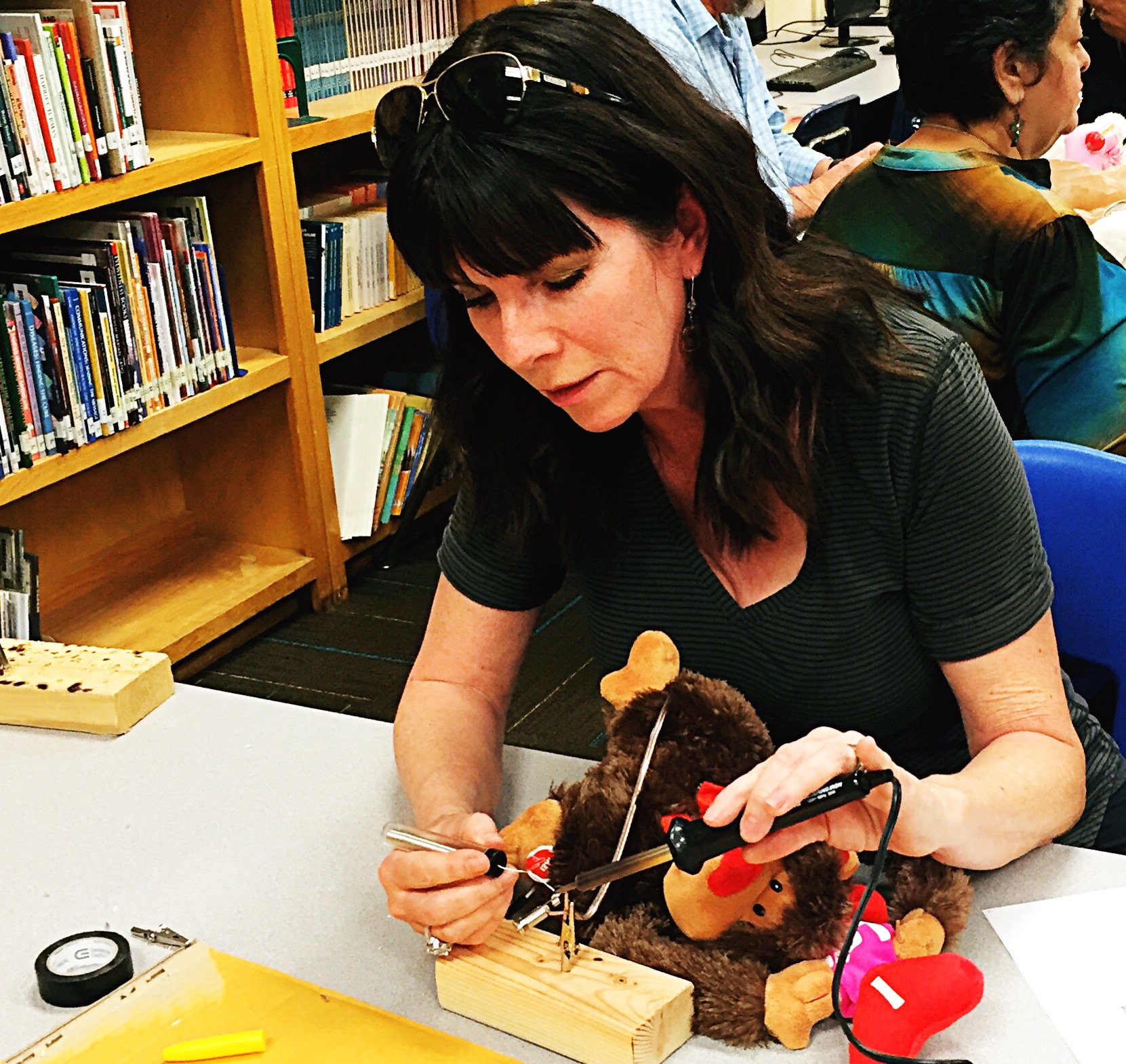
Working at a Title I district with very limited materials, I have to be extremely resourceful. This year I learned how to adapt toys to be switch activated. These are toys that move and/or sing when you squeeze their paw or hand. Some of our students don’t have the fine motor skills to be able to do this. It was really empowering to make such a fun item accessible for them. I even got to solder. The workshop was put on by our wonderful Arizona Technology Access Program. (You can google to see what programs your state might have.)
I was so happy with the dancing monkey I adapted. Until I got to school the next day and realized we didn’t have any switches that fit him. I figured I’d just buy one. But then I saw the price; $50 for one little switch! Back to the drawing board.
Adapted Switch Toy
Sooooo I signed up for a Make Your Own Switch Workshop. There I was able to make two switches for just $10. We adapted answer buzzers ( 4 for $16.00 at Walmart). The time I spent to adapt two switches was about 90 minutes, the first one took the longest.
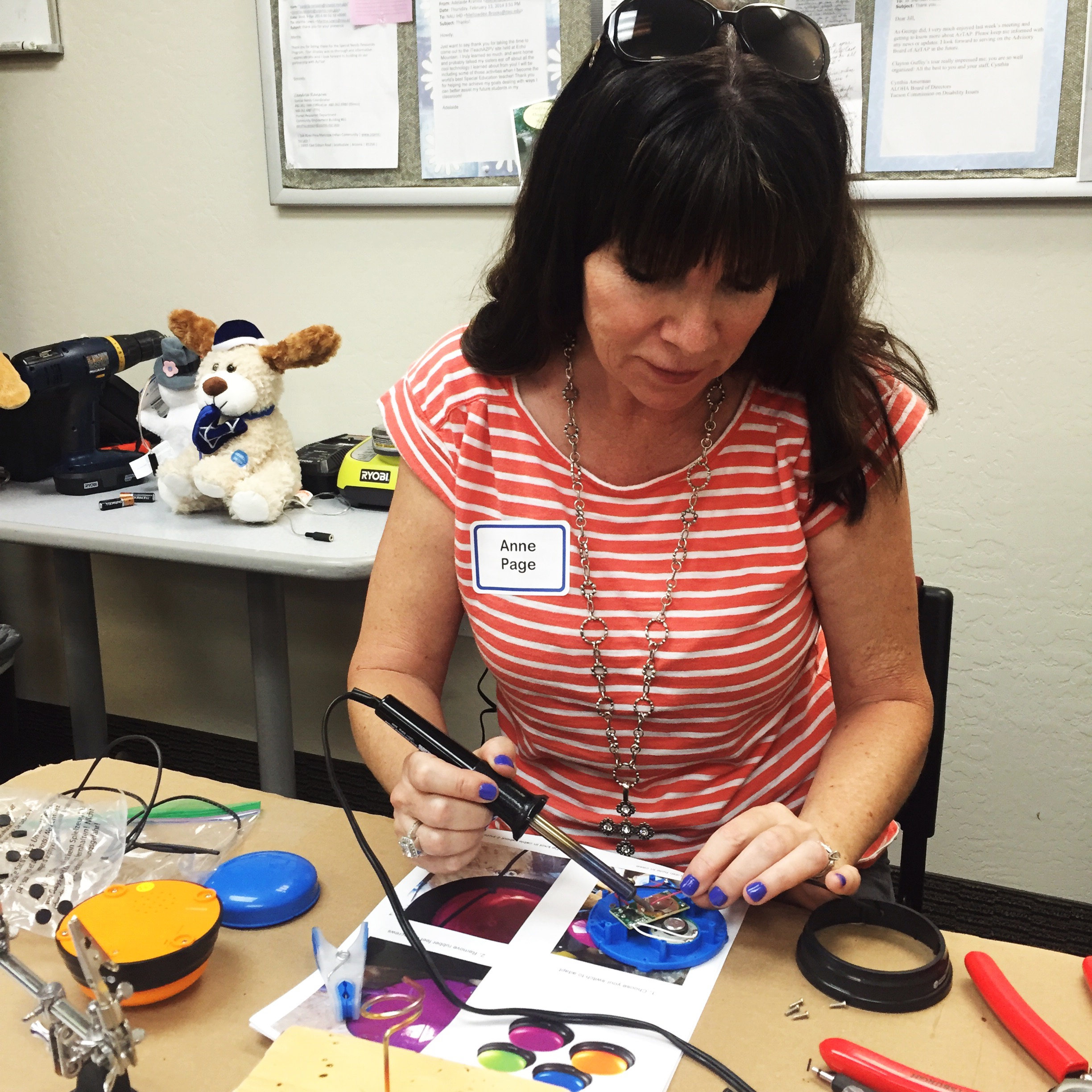
Adapt a Switch
The bonus was sitting next to two parents of children with autism. They were making the switches for their kids. How cool is that? Talking to them in a casual setting about their experiences and expectations was so enlightening. I really got some insight into what they struggle with.
TIP #3 You Don’t Have to Start High Tech
The other thing I learned, in a really fundamental way, is that assistive technology does not need to be high tech at first. It seems that many parents, teachers and staff immediately think “voice activated device” or “get them an iPad”. AND that this technology will magically and immediately give the student language skills the second they receive it. If only!
Students need to learn to label, request, comment, command and greet. A machine can’t teach them these skills, but we can. A voice generating device may be exactly what they need eventually. But sometimes we can’t get one right away. We can still teach them that using symbols(voice activated or pictures) gives them the power to express what they want, when they want.
With many of our students, we started with low tech Core Vocabulary Boards and Go Talk Pages. We could get started right away with these because they’re inexpensive to create and so accessible. It was easier to get “buy-in” from support staff because they saw it working.
Core Vocabulary
We used The Dynamic Learning Map Core Vocabulary; a list of 40 words that have been proven to be most effective socially and academically for students with significant cognitive disabilities. Developed at the Center for Literacy and Disability Studies at The University of North Carolina at Chapel Hill, these 40 words are based on AAC research. I’ll provide a link to more information below. Next week, I’ll talk more about core vocabulary boards and how I used them in group therapy with great success!
In summary, you CAN AAC-Like-a-Boss. Just remember these three tips:
1. You don’t need to know everything.
2. You can be resourceful.
3. It doesn’t have to start out high tech.
I know it can seem scary but we SLPs know language. Remember AAC is just another way to facilitate language.
Whether you are reviewing your year or you’ll be working this summer, I hope you found something helpful here. If you would like a FREE Summer SLP Like a Boss planner to help you with your reflection and planning, click here.
If you are interested in a FREE video tutorial on how to make a switch, let me know in the comments below.
SLP-Like-a-Boss,
Anne
Links: Praactical AAC
KidzLearnLanguage
Dynamic Learning Map Core Vocabulary
How Facebook Can Make You a Better SLP







 Hey there I’m Anne Page. I help heart centered SLPs and educators put the fun in functional communication.