by Anne Page | Nov 1, 2016 | Inspiration, Uncategorized
Going to the American Speech Language and Hearing Association (ASHA) convention can be a little overwhelming. It sure was for me the first time I went (and the second time too); I felt pretty alone. I had no idea what classes to take, what to wear, what to bring or who I would talk to.[spacer height=”20px”]
Fast forward five years to now, when I’m lucky enough to be going again for the fourth time (San Diego, Chicago, Denver and now Philadelphia). It’s the perfect time to share this list of must-do tips for successfully navigating the ASHA convention.[spacer height=”20px”]
Plan your courses.
You’ll want to go through the pocket planner or the program guide several times. Here’s a little video on how I do it. Besides your area of interest, it’s always good to choose one course that will challenge you or is something you wouldn’t normally take. Because it’s good to just shake things up. I got this idea from Activity Taylor blogger, Kim Lewis. Now I do this every year.[spacer height=”20px”]
Several of the school SLP bloggers are presenting this year; I put together a Here’s a list of the ones I know about. You’ll definitely want to consider these.[spacer height=”20px”]
- iPad & EBP: Transforming Toy into Tool in Education, Danielle Reed , Saturday 8-10 am
- Lyndsey Zurawski , Saturday 8-11
- Use What You Have: Practical uses for common objects to target all areas of communication, Felice Clark, Hallie Sherman, Natalie Snyders Saturday 4-5
- Social Media: Harnessing the Power & Avoiding the Pitfalls, Jenna Rayburn, Saturday 1:30-4:30
- Practical Tips to Manage Your Pre-K Through Fifth-Grade Caseload: How to Maintain Your Sanity, Felice Clark, Rachel Nortz,Thursday 3-4
- Progress Monitoring in the Schools, Lisa Kathman, Sarah Bevier, Friday 10:30-11:30
- Apps and EBP-How to Succeed in the Quest to Identify Research-Based Apps, Mai Ling Chan, Mary Huston, and Jessica Solari, Friday 10:30-11:30
Show up early for your courses
You’re going to want to get to your classes a little early. This is super challenging for me since I tend to run about five minutes late for everything. But some of the sessions are really crowded;if it’s a two hour session, you’re going to want to be comfortable. Seating is limited as well. So get there 20-30 minutes early, then maybe someone will save your seat so you can go grab a cup of coffee. Everyone is super nice (of course).[spacer height=”20px”]
Food is important plan ahead
Plan ahead for your lunches. If you have back to back courses it’s pretty tricky to leave the convention center and get back on time. Because, let’s face it, everyone’s got to eat, so the restaurants get really crowded. I usually do a combination of the ASHA prepaid lunches and snacks. Keep some snacks in your purse. If you’re like me you’ll need them to keep your energy up. Nuts, trailmix, and protein bars are all great. (Okay, add a little chocolate to keep things interesting).[spacer height=”20px”]
What to wear
Really consider your footwear. You’re going to be walking a lot. My choice: boots and booties. I love boots and they’re great for walking around. (And they’ll be warm for this Arizona girl). Of course, you can dress however you want. Remember you’re going to be sitting a lot, so you want to be comfortable. But you’re going to want to look professional too, (at least I do). It looks like a coat will be in order for this year’s Philadelphia location (Weather forecast highs in the 50s, lows in the 30s). I definitely recommend using the coat check instead of hauling your coat with you all day. I plan to dress in layers, because you never know what the temperature’s going to be like in each room. There’s nothing worse than trying to concentrate when you’re freezing or roasting.[spacer height=”20px”]
Tackling the Exhibition Hall
The first few times, it can be a little overwhelming because it’s HUGE. Get the floor plan that comes with your registration packet and have a look. Does that sound geeky? I just remember my first time. I didn’t have a plan and I ended up getting completely overwhelmed and exhausted. So last year, in Denver I did it differently. I went through the floor plan and highlighted all of the booths I knew I wanted to go to. Then I made sure I went to those first. I also scheduled myself a nice block of time to look at things. All the things! Remember, if you only go at the end of the day, after you’ve taken all those courses, you might just be a little brain-dead. This is a great opportunity to check out some of the big vendor’s booths. There’s always tons of swag. Super Duper has a huge area (it’s like a store), where you can actually purchase therapy materials. They also give you a big huge tote bag to carry everything in. Again, plan ahead, you don’t want to be caring that huge bag with you all day to all your classes.[spacer height=”20px”]
Be sure to go visit my SLP Blogger friends at their booths. You can learn more about their products, say hello, get more SLP swag, and sign up for prize giveawys.
- Booth 514, Danielle Reed, Hallie Sherman, Jenna Rayburn, Natalie Snyders, Felice Clark, Shannon Werbeckes (This group is hosting the ASHA Blogger Meet n’ Greet on Thursday night at the Marriott Hotel, Grand Ballroom, Salon 1 from 7:30 to 8:30)
- SLP Talk, Speech Paths and Speech Language Pirates at Booth243
- Lyndsey Zurawski has a booth
- Peachie Speechie Booth 528
- Lisa Kathman and Sarah Bevier from SLP Toolkit Booth 739,
- Kim Lewis at 3DSLP’s booth
- Marisha McGrorty Lesson Plan Membership Booth 743.
[spacer height=”20px”]
Have fun
I have one last tip for you. Reach out to some of the SLPs that you know from social media. Maybe you can meet up with one or two of them. I’ve made some great friends that way. One of the best things about going to an ASHA convention is connecting. We all work so hard, it’s nice to have time to socialize with people who speak our language.[spacer height=”20px”]
That’s all for now. I hope you find these tips helpful and I would love to see you in Philadelphia! I’ll be posting on Instagram (Beautiful Speech Life) and maybe even Facebook Live.
Wishing you more joy, less stress,
Anne
If you want more informative SLP info, tips and freebies join the tribe by signing up below.

by Anne Page | Oct 25, 2016 | Inspiration, SLP Like a Boss, Uncategorized
In this series I’m interviewing SLP boss women who work by day as a speech language pathologist, but at night (and on weekends) they are building a business. I’m talking about websites, blogs and therapy materials for their fellow SLPs and teachers. These are women I admire professionally and who inspire me. I write this series because I feel we can all make our practice as SLPs better and stronger by connecting with other SLPs.[spacer height=”20px”]
Can you imagine interviewing a guru? That’s what I felt like when I had the great pleasure of a phone chat with Dr. Carole Zangari. Not only is she is a professor of Speech Language Pathology at Nova Southeastern University(my alma mater) where she teaches AAC classes at the master’s and doctoral level; she also supervises AAC clinical services for children and adults, and administers an AAC lab. She has presented and published on AAC topics in national and international venues. She is a past coordinator of ASHA’s AAC Division. I could go on and on. Suffice it to say, she has opened the doors of AAC for thousands.[spacer height=”20px”]
Tell me about yourself in seven words: passionate about aac, support colleagues + next generation[spacer height=”20px”]
Where did you go to grad school?: Doctoral degree from Purdue University (where I spent most of my graduate time), Masters degree from College of New Jersey and undergraduate degree from the University of Pittsburgh.[spacer height=”20px”]
What are your top three SLP must haves (other than your own amazing materials)?:
“Well, Anne, I learned not to get attached to therapy materials early on. I was working with adults with pretty significant behavioral and cognitive impairments during my CF. My supervisor was pretty old school and of the belief that an SLP should be able to do therapy with (almost anything). Periodically, she would meet us at the door as we were going in to do therapy, hold out her hands and we’d have to turn our materials over to her and then go do therapy. We learned pretty quickly to focus on strategies. But if I did have to choose I would say internet access, a laptop and a mobile device, then you can access just about anything.”[spacer height=”20px”]
What do you love most about what you do?:
“At this point in my career, every day is different. I spend about one third of my time with the autism grant and then teaching with the AAC clinic. For my hobby I have Praactical AAC. I love the diversity and being able to touch the next generation of SLPs.”[spacer height=”20px”]
Tell me your advice for the newly minted SLP: (Anne’s note: This is GOLDEN)
“Mindset. Commit yourself to being an excellent clinician. It can take a long time. Give yourself time to learn, but commit to being great. The real prize is in the outcome.”[spacer height=”20px”]
Tell me about your blog:
“I started it in 2011 with my dear friend Robin Parker who passed away a few years later. We decided we would write blogs we wished we had when we got started. Although we started it for SLPs, it has broadened to include parents and other professions. We receive 2800 page views every day, with an additional 2300 mailboxes that receive a daily post as well. At this point there have been over 1500 posts.”[spacer height=”20px”]
What SLP-boss inspires you? :
“Jane Farrell in Australia. Her energy, her ability to lead teams and change entire schools. I’m inspired by every conversation we have or post I read.”[spacer height=”20px”]
What is your favorite children’s book?:
I don’t know if you remember Caps for Sale? It’s a oldie but a goodie. I read it when I was a kid. It’s so fun for describing and acting out.[spacer height=”20px”]
What about picture books?:
All of the Alexandra Day books about Carl, like Good Dog Carl. They are so language rich, with a cool take on absurdities. They have almost no text, just the beautiful illustrations.[spacer height=”20px”]
Let’s commit ourselves to being great,[spacer height=”20px”]
Did you like this post? Comment below and scroll down to the bottom of the page to subscribe to the Beautiful Speech Life tribe, we’d love to hav you! [spacer height=”20px”]

by Anne Page | Oct 18, 2016 | SLP Like a Boss, SLP Time Hacks, The Organized SLP, Uncategorized
Today I’m welcoming my colleagues (and friends) Sarah and Lisa from SLP Toolkit, to share with you how they quickly and efficiently gather data for a transfer student. You know…the one that shows up with an IEP that expires in three days. It’s happened to all of us right?[spacer height=”20px”]
Just for a little background info, SLP Toolkit is a web based software program that was created by two speech language pathologists. Lisa Kathman and Sarah Bevier. I’ll provide some links at the end of this post so you can learn more. Let’s jump right in and see what they suggest.[spacer height=”20px”]
The transfer student is the bane of every school-based SLP’s existence. The student pops onto your caseload, often with an IEP that is expired or soon to expire, with about 12 goals that you have no idea how the previous SLP even measured.[spacer height=”20px”]
So what if that is the case? The IEP is due immediately and you don’t know the student. The school year is in full swing and you are way beyond the start of the year “getting to know you” activities. How do you get the data you need to write a new IEP for a student you just met?[spacer height=”20px”]
Well, if you have SLP Toolkit in your arsenal, there’s no need to panic! First, you add the student to your caseload and open up a Present Level Assessment (PLA). As a new student, giving all components of the PLA will provide you with a really comprehensive communication profile. These assessments contain both descriptive language (e.g. language sample, narrative or expository retell) and specific skill based (e.g. vocabulary, answering questions, grammar, problem solving) measures. The software scores everything for you, noting areas of strength and need, as well as provides an auto-summary of results that can be copy and pasted into the present levels section of the student’s IEP. [spacer height=”20px”]
With a comprehensive present levels section, the rest of the IEP writes itself since your goals and service time are driven by this information. You can probe areas of weakness further using criterion referenced tests in the ‘Progress Monitoring’ section of SLP Toolkit. Criterion referenced tests measure the student’s performance against a fixed set of predetermined criteria. You will use this information as baseline scores on your IEP goals and then re-test at each grading period using the same measures. To ensure you are writing measurable goals that unfamiliar readers can understand, the SMART goal drop downs in the ‘Goals’ section of SLP Toolkit makes writing an objective, measurable goal a breeze. If any of the students needs can be met through accommodations versus goals (or if these are needed in addition to specialized instruction), you can browse a wide variety of options in the ‘Teacher Strategies/Accommodations’ section of SLP Toolkit.[spacer height=”20px”]
Once your goals are created inside of SLP Toolkit, you can hit the “print” button to access pre-populated data sheets (one less thing to create for this new student!)[spacer height=”20px”]
Transfer students only cause panic if you don’t know what to do with them. With SLP Toolkit on your side, you have a step by step guide to ensure you can develop and carry out a comprehensive treatment plan for any new student on your caseload.[spacer height=”20px”]
Lisa & Sarah, SLP Toolkit[spacer height=”20px”]
One of the most used tools in my bag of tricks! SLP Toolkit has saved me HOURS of work. Now I can easily assess present levels and give accurate, helpful progress reports. And the goal bank to die for. I know and trust this awesome resource so much that I’ve teamed up with SLP Toolkit to provide you this code.Use my code BSL16 and you’ll receive:
$19 to apply to either one free month or towards an annual membership. Just click on the pink rectangle to learn more and sign up. Remember the code is BSL16 for your special discount.

This link is an affiliate link, which means, if you choose to purchase through this link, I’ll earn a commission. This commission comes at no additional cost to you.. Please understand that I have experience with this company and I recommend it because it’s helpful and useful, not because of the small commission I make if you decide to purchase.
by Anne Page | Sep 6, 2016 | Quick Therapy Tips for the SLP and SLPA, SLP Like a Boss, Uncategorized
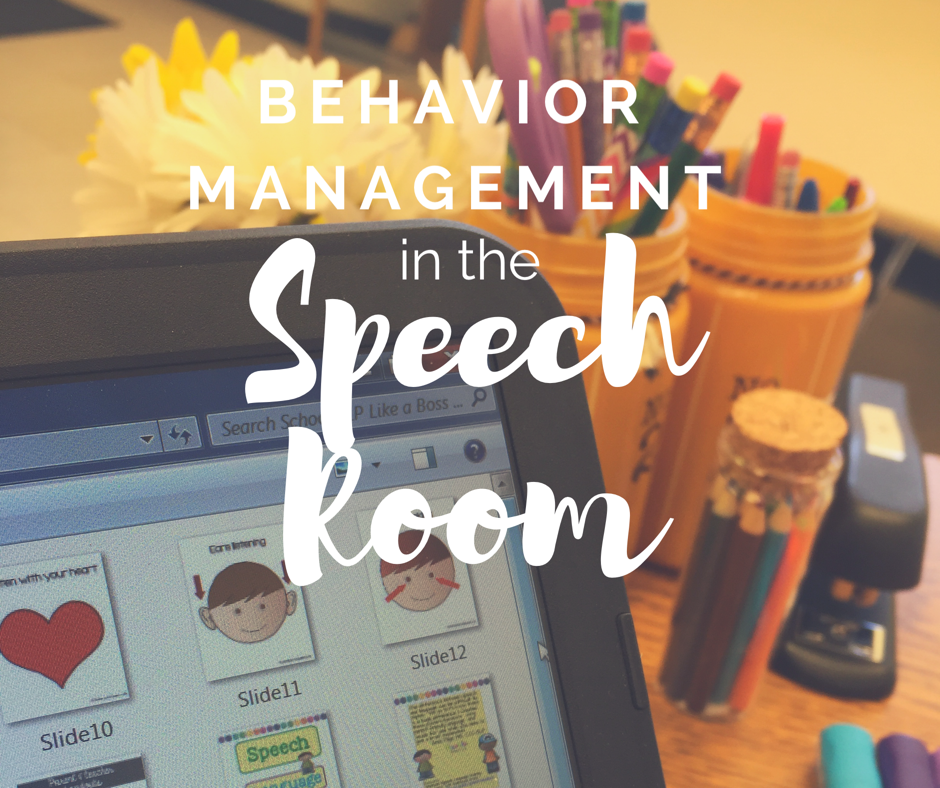
How do you deal with behavior issues? Behavior Management for the SLP is so important. I know when I have groups of busy, excited, talkative students sometimes they don’t automatically do what I want them too.[spacer height=”20px”]
I don’t want to spend my whole session dealing with behavior. Pretty sure you don’t either. But the reality is, many times you will have to teach students how you want them to behave.[spacer height=”20px” id=”2″]
Have you got four minutes to help you manage behavior in your speech room? That’s all the time it takes to read these tips on using visuals and routines to set-up and maintain good listening behaviors in your students. The listening visuals are included as handouts in the FREE School SLP Like a Boss Smart Start Kit. (If you don’t have it yet, no worries, just click on the pink rectangle below)[spacer height=”20px”]
Today I want to give you a quick read (seriously less than 5 minutes) giving you an idea of how you might want to use the behavior handouts in your speech room. The tools I use for classroom behavior management are included in the kit: listening posters and whole brain posters. These visuals are a life-saver, they serve as a constant reminder and have the added bonus of being easier for our language impaired students to understand. (Sometimes you know they’re just hearing our words sound like “blah blah blah”).[spacer height=”20px”]
It’s important to set expectations from the very beginning. By this I don’t mean just pointing to the posters once. Now’s the time to teach the meaning of the posters and foster a group connection. For example tell them, “In the speech room we are good listeners. We listen with our heart, our eyes, our ears, our mouth and our bodies.” You are giving them specific information so they know exactly what you want from them. Much more clear than “you need to be a good listener”[spacer height=”20px”]
Here’s what you need to get started:[spacer height=”20px”]
Listening Posters (pgs 10-15)
Print and laminate these posters. Place them where your students can see them from your therapy table. These are great for the primary grades.[spacer height=”20px”]
Explain each poster. For example: “This is what we need to do to be a good listener.” Point to each picture, read caption and demonstrate. Have the students show their eyes looking, ears listening, etc. After you go through all the posters, have students say them with you as you point and show you again. This is so worth taking the time to do. Remember you want to set them up for success. [spacer height=”20px”]
As you go through an activity, catch your students doing the right thing. Don’t wait until you have to say “where are your looking eyes?”. Give some positive feedback. “I like how Johnny’s eyes are looking right at me. I know he’s listening.” Kids need ten positive statements to every negative. Positive praise helps children become more aware of what they’re doing well, and more excited to continue trying. [spacer height=”20px”]
Make your feedback specific. It’s so easy to just say “good job”. But when we give specific praise, students know exactly what they are doing right and why you are happy about it. So instead of “great job”,try, “You are sitting quietly and looking at me, I know that you are learning”.
When you do need to give a verbal reminder to get the behavior you want, point to the poster while you say “Remember, mouth quiet”. And then fade the verbal prompts and just point.[spacer height=”20px”]
Whole Brain Teaching
I also have had really great success with the Whole Brain Teaching posters. I use these to give my busy little friends a routine to follow right when they come into the room. As soon as they sit down, we go through each rule. This is really fun and kind of bonding. Once they learn them, I let a different student be the leader each time. I use these with primary students. But you can use them with older students too. You just need to have different posters and a more age appropriate way to say the rules and make the motions.[spacer height=”20px”]
Go to the FREE Whole Brain link on page 9 in your School SLP Like a Boss Smart Start kit. Print and laminate the Whole Brain Posters. Click on the video link to see an example of how they are used. [spacer height=”20px”]
I hope these tips have you on your way to great behavior management. Following these will help you foster better relationships with your students and help them feel secure knowing exactly what the speech room boundaries and expectations are.[spacer height=”20px”]
You’ve got this,
Want to know more? Here’s what two amazing school SLP bloggers do for behavior management:[spacer height=”20px”]
Cheri from Super Power Speech shares some great tips on using visuals. Check out her blog post here. (Plus there is a great visual freebie)
Nicole Allison at Allison Speech Peeps wrote a really great article on how she uses Whole Brain Teaching during therapy.
Here’s a quick little article on ADHD and positive reinforcement

by Anne Page | Aug 21, 2016 | Freebies, SLP Like a Boss, SLP Time Hacks
Two weeks into the school year and already feeling a tiny bit overwhelmed?[spacer height=”10px” id=”2″]
It happens! With IEPs, evaluations, scheduling, team building and oh yeah, THERAPY, you’re probably wishing there were more hours in a day. Believe me, I’ve been there.[spacer height=”10px” id=”2″]
But, if you’ll remember, we’re working on building ourselves some systems; an SLP foundation that will provide an evergreen underlying structure. This way you don’t have to reinvent the wheel every year. You’ll feel calm and collected whether you’re walking into a meeting or walking into your therapy room.[spacer height=”10px” id=”2″]
That’s why I created the FREE School SLP Like a Boss Smart Start Kit. Using it will help you feel more organized and on top of your game in no time![spacer height=”10px” id=”2″]
This 62 page kit includes some super helpful resources that you’ll find yourself using year after year.[spacer height=”10px” id=”2″]
You might want to read this before you print anything. Let me walk you through the best way to use this step by step.[spacer height=”10px” id=”2″]
Step 1: Read Letter to a Young SLP-get inspired![spacer height=”10px” id=”2″]

Step 2: Print Listening Posters: Print and laminate these posters. Place them where your students can see them from your therapy table. Explain them. For example: “This is what we need to do to be a good listener. Point to each picture, read caption and demonstrate. After you go through all the posters, have students say them with you as you point. (eg.”Eyes looking, ears listening, etc.”)[spacer height=”10px” id=”2″]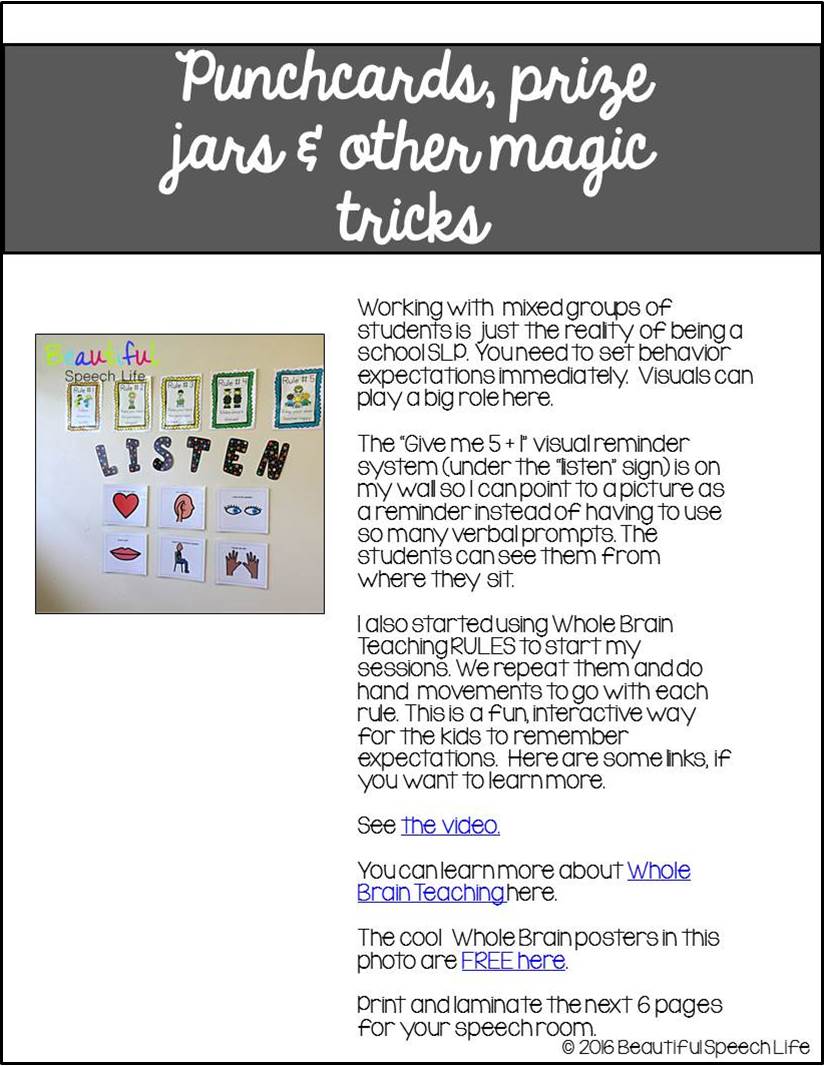
Step 3: Go to the FREE Whole Brain link on page 9. Print and laminate the Whole Brain Posters. Click on the video link to see an example of how they are used. I use these to start every session for my K-4 students. I still use it with my junior high functional skills class, we just do the movements in a more “adult-like” manner.[spacer height=”10px” id=”2″]
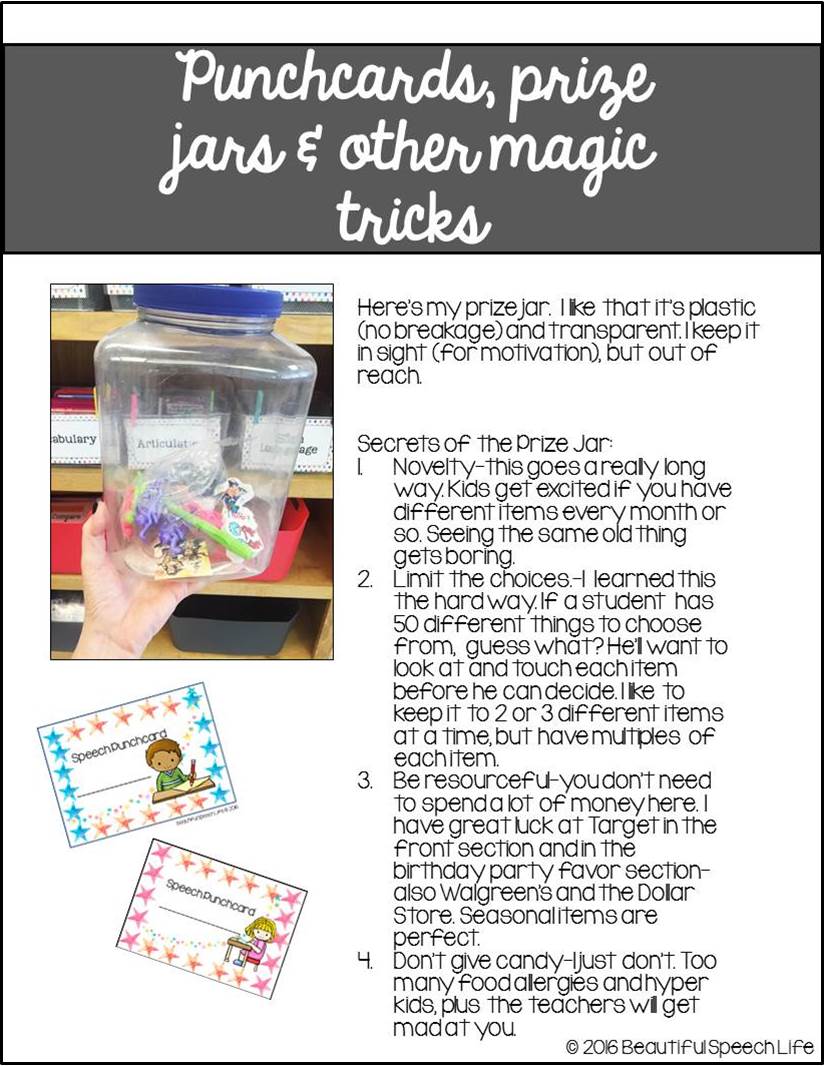
Step 4: Choose the Speech Punchcards you like and print them. Now, I use the color version because kids love colorful things. I also include a black and white version because of Murphy’s Law-color copiers are most likely to break, jam, or run low on ink when you just have 5 minutes to print something. These are such easy prep, just two cuts per page and you are ready to go. [spacer height=”10px” id=”2″]
Step 5: Get yourself a prize jar or box. Make a trip to Target and/or the Dollar Store for some cheap, fun prizes. Read my tips for how to keep it interesting on page 17.[spacer height=”10px” id=”2″]
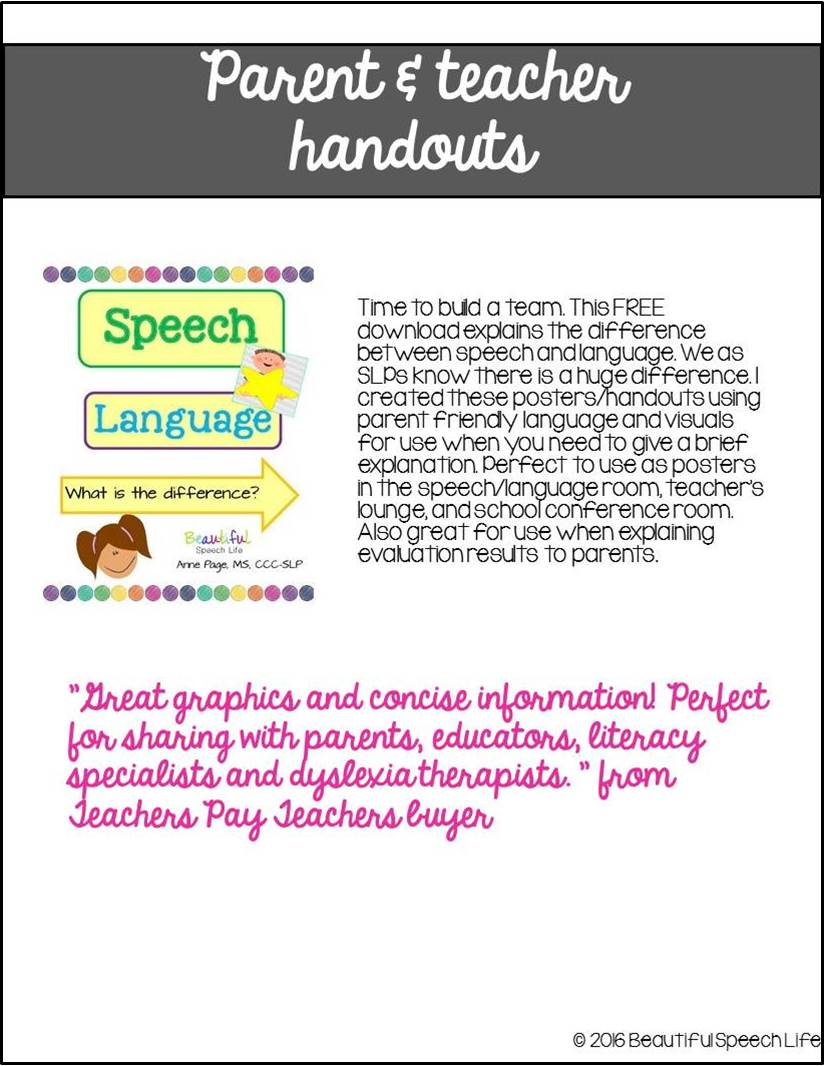
Step 6: Print the “Speech Language, What is the Difference?” posters. Decide where you want to put them. Some ideas are: speech room bulletin board, staff room, and conference room. They are also handy for parent teacher conferences, staff development days and evaluation meetings.[spacer height=”10px” id=”2″]
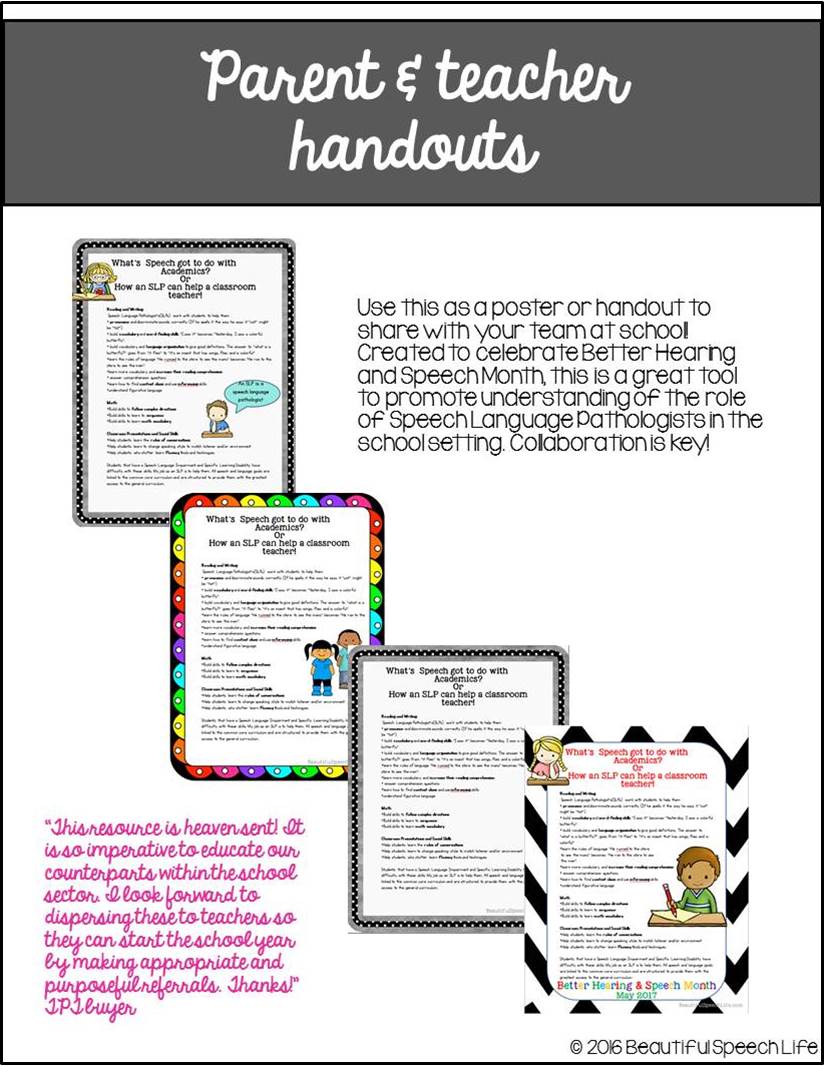
Step 7: Look through the parent teacher handout section. Choose some of the “What’s Speech got to do with Academics?” handouts to have on hand for IEP and eligibility meetings. These can be used as posters too. Bonus: I included on to use in May 2017 for Better Hearing and Speech Month. See?! Look how on top of the game you are already.[spacer height=”10px” id=”2″]
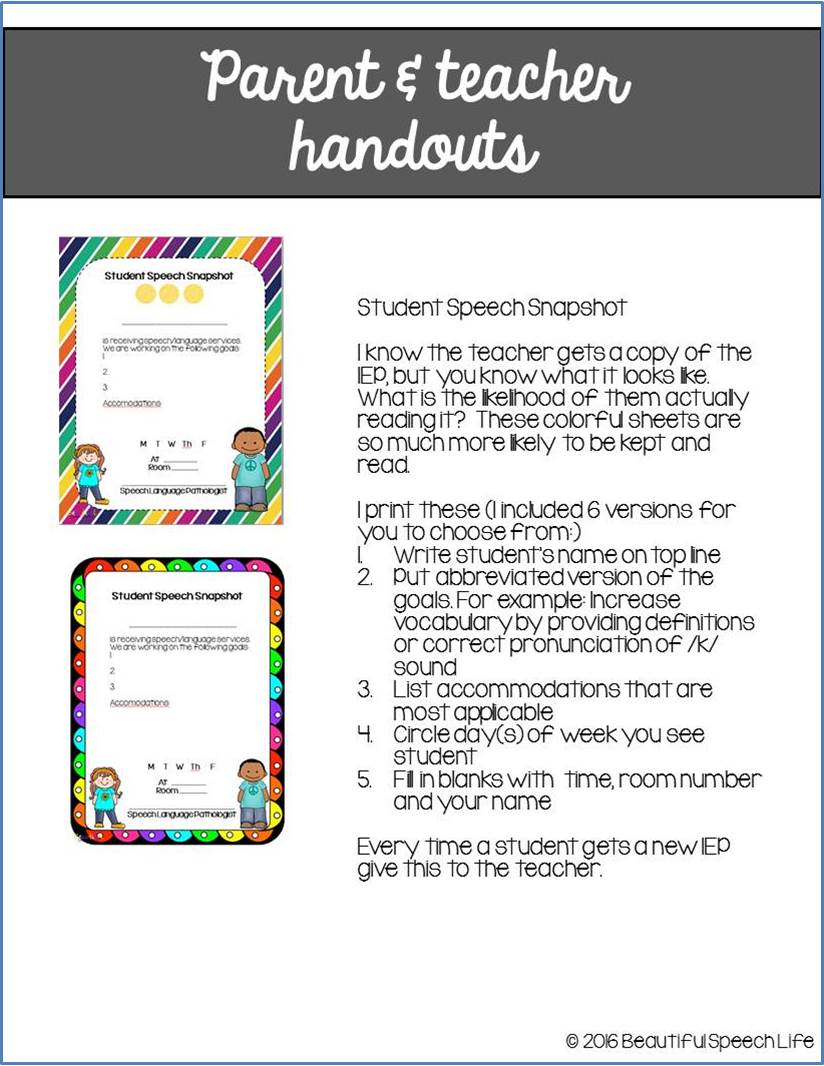
Step 8: Choose the Student Snapshots you like best. Print one for each student on your caseload, plus some extras to fill out as IEPs are reviewed and revised. (I just keep the extras in a file folder) Follow the instructions on page 32.[spacer height=”10px” id=”2″]

Step 9: Read through “But What Does it Mean? 10 Tips for Explaining Speech and Language Evaluations in Parent Friendly Language”. This is important stuff that will help you to make that all important connection with parents (a big part of being an SLP Boss). If you’re a paper person print it out.[spacer height=”10px” id=”2″]
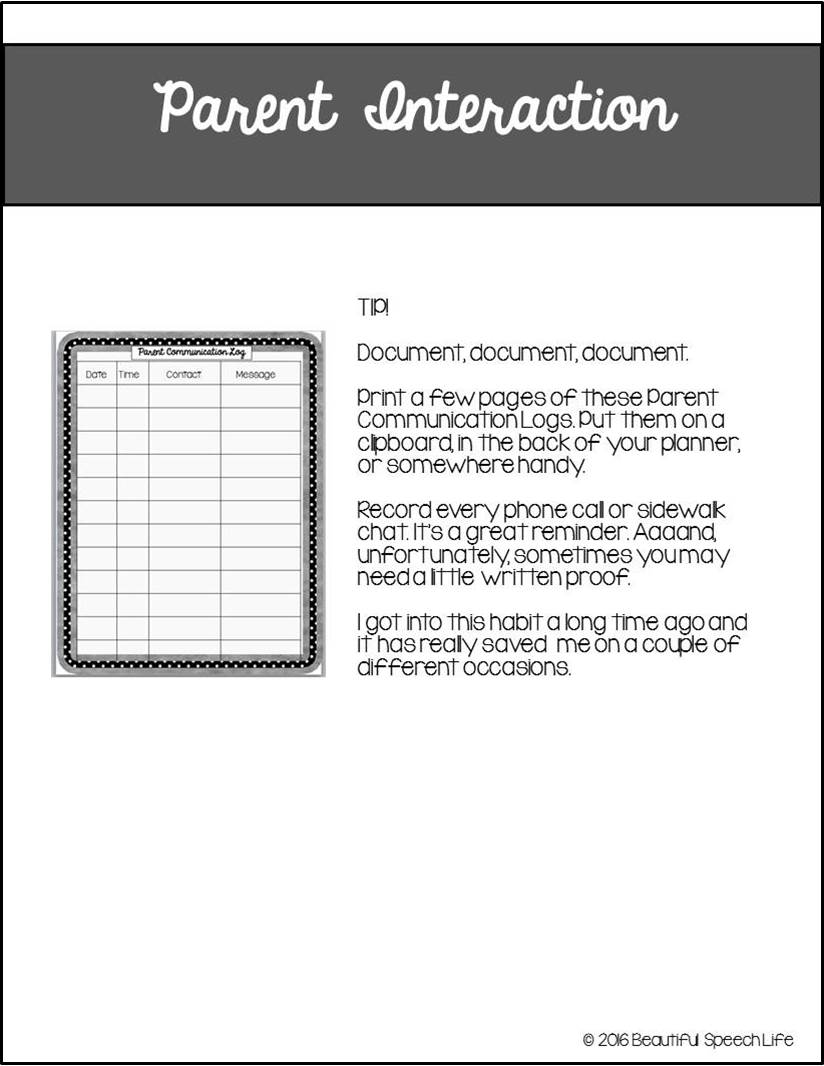
Step 10: Print 3 copies of the Parent Communication Log sheet of your choice. Use this all year. See instructions on page 51.[spacer height=”10px” id=”2″]
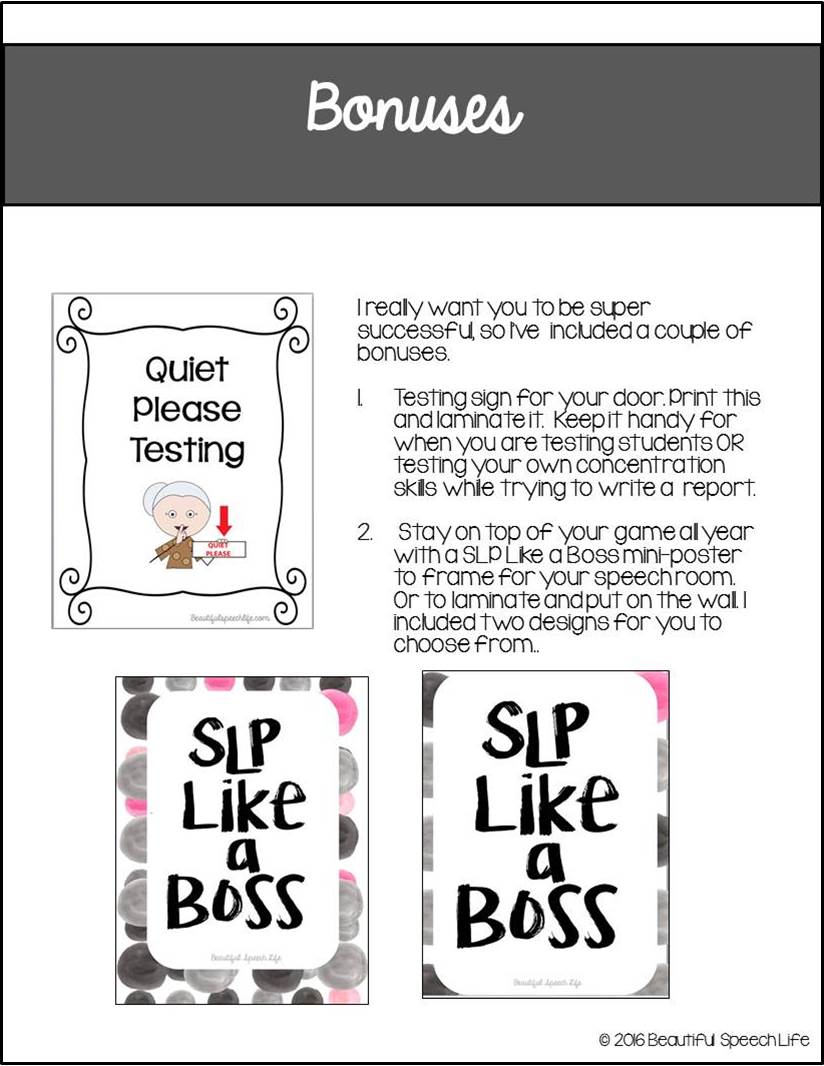
Step 11: Print and laminate testing sign.
Step 12: Print and frame (or laminate) you’re favorite SLP Like a Boss Poster. It’s my little present to you, a reminder that you’ve got this.[spacer height=”10px” id=”2″]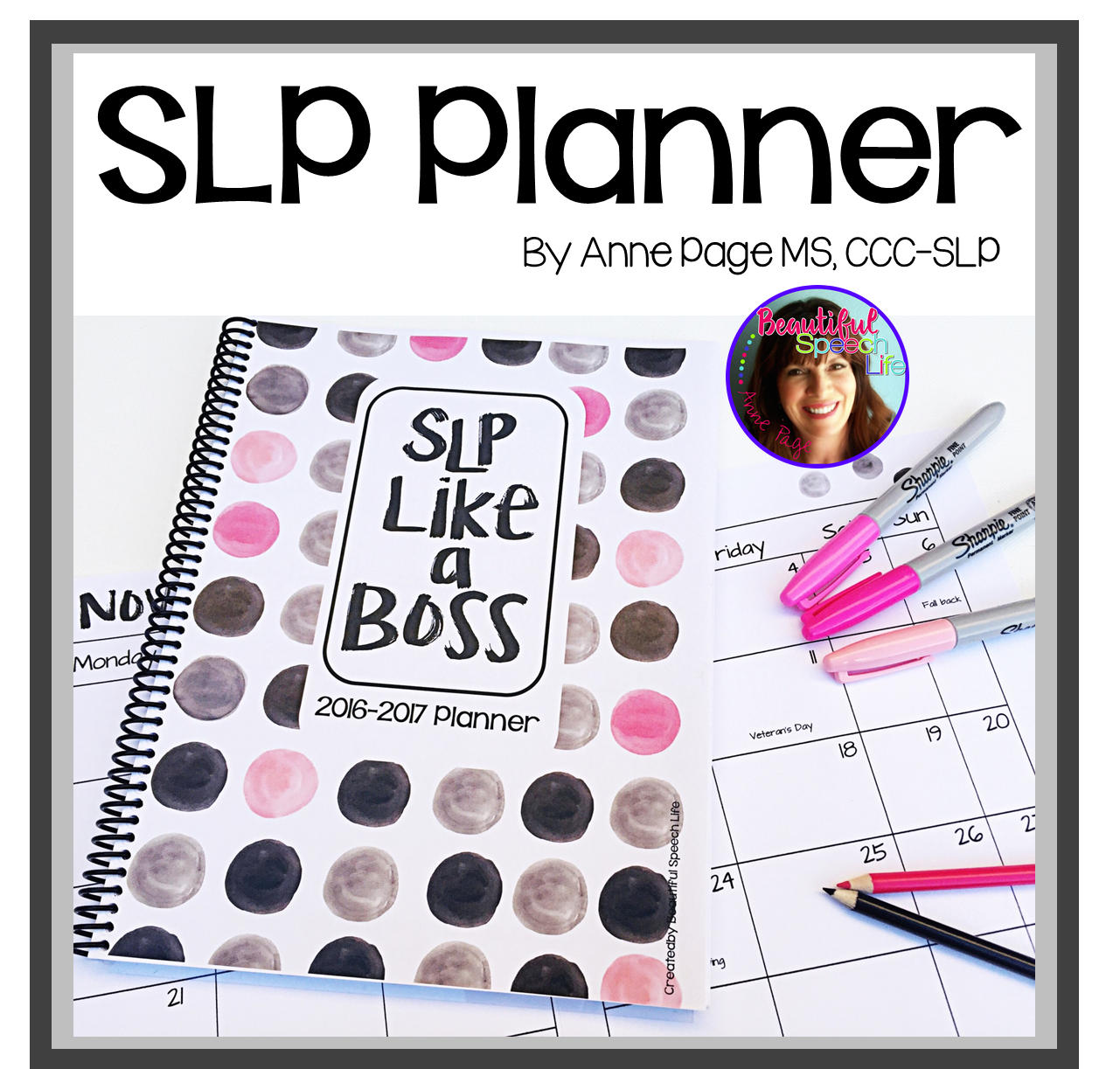
Step 13: Click this link if you need an SLP Planner. This planner is by my side all day. At the affordable price of $5.00, it is chock full of resources. The front cover is the only color page; the rest of the pages are black and white. You provide the color, because doodle borders and coloring pages are included. Yes, it’s true, I do love to color-that might be why I included these fun pages.[spacer height=”10px” id=”2″]
Step 14: This step can be a game changer. If you are really ready to up your game, have I got a tool for you. It is one of the most used tools in my bag of tricks! SLP Toolkit has saved me HOURS of work. Now I can easily assess present levels and give accurate, helpful progress reports. And the goal bank to-die-for! Go to pages 60 and 61 to read more about it. You can also click here and here to read the articles I wrote about SLP Toolkit.[spacer height=”10px” id=”2″]
So there you have it! Everything you need to feel more joy and less stress as you get your school year off to a brilliant start.[spacer height=”10px” id=”2″]
Click here to get your FREE copy.

ALL my best,


 Hey there I’m Anne Page. I help heart centered SLPs and educators put the fun in functional communication.