by Anne Page | Jul 14, 2017 | Inspiration, SLP Like a Boss
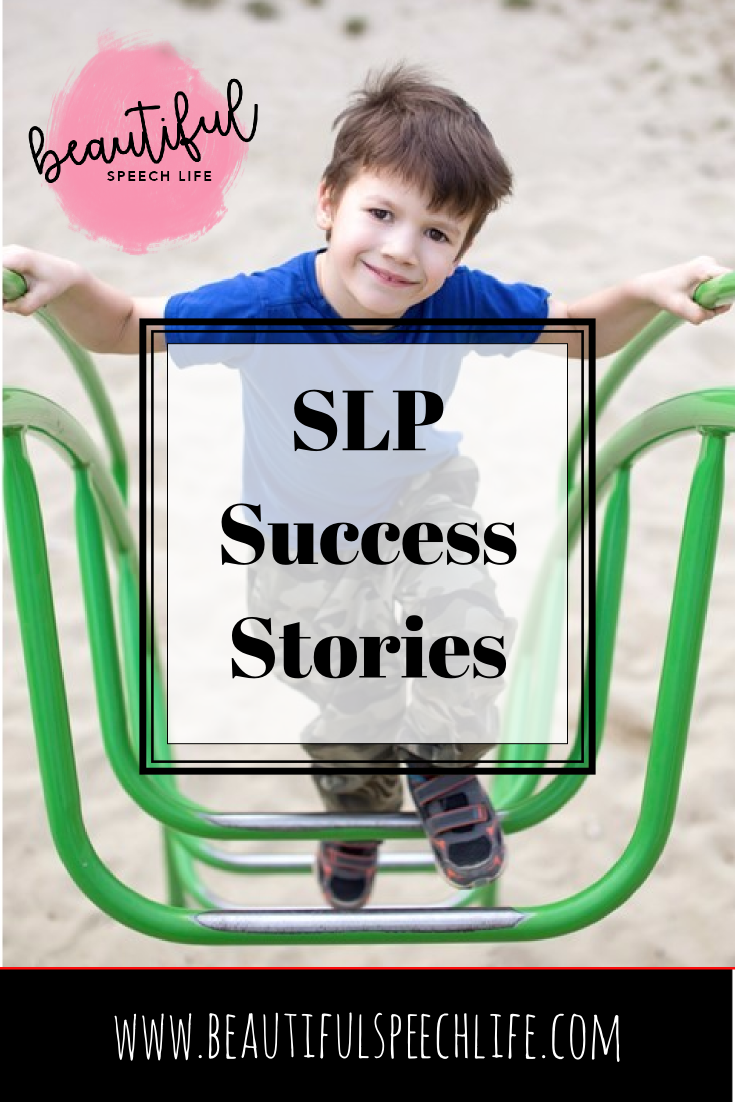
As a school speech language pathologist (SLP) we are lucky to be a part of some wonderful SLP success stories. After all, that’s why we do this job; we love to be able to make a difference.
This is a really cool little story with a happy ending. A few years ago we got a new student in one of our functional skills classrooms. He was really quiet and when he did speak, he was very difficult to understand due to a severe phonological disorder. Little Ivan (not his real name) had also gone for years with an undetected hearing loss.
With time we were able to correct a lot of his phonological errors. As people begin to understand him, he became more confident and less shy. Ivan was a very kind student and quickly became the leader of the class. So much so, that we started to wonder about his diagnosis of moderate intellectual disability.[spacer height=”20px”]
When he was reevaluated, sure enough Ivan’s former diagnosis did not fit. Turns out he simply had a learning disability. I guess that the learning disability paired with the extreme shyness, the inability to be understood, the language impairment and the hearing loss had all combined against him.[spacer height=”20px”]
Our team slowly transitioned Ivan into the resource room and general education setting. We took it slowly and had lots of supports in place. The first day he took the regular bus home (instead of the sped bus) the school psychologist and I followed the bus to make sure he was able to independently get off the bus and go straight home. (He was).[spacer height=”20px”]
It wasn’t an easy transition and we had to stand up against a lot of people that didn’t believe us. But it was so worth it![spacer height=”20px”]
I’m happy to say that Ivan has is still in a general education classroom with resource support. I still get tears in my eyes telling this story, we were able to change the course of his life. That is so powerful![spacer height=”20px”]
Let’s celebrate our wins together! Today is the start of a new feature. I’m sharing one of my SLP success stories today and in the coming weeks I’ll feature yours. I’d love for you to submit a quick story, just email me at beautifulspeechlife@gmail.com if you’re interested. I can’t wait to hear what you have to say.[spacer height=”20px”]
Shine Bright,
P.S. You can read more inspirational stories about SLP bosses
here and
here. I’d also love for you to come and join the fun on
facebook, you can be the first to see live videos where I share SLP tips and tricks.

by Anne Page | Jun 2, 2017 | Freebies, Inspiration, SLP Like a Boss, The Organized SLP, Uncategorized
Do you love planners as much as I do? I created a special SLP summer planner just to help you make sure your summer doesn’t slip away.
And the best part…it’s FREE!
WE made it through another year! Now for a well-deserved summer break. If you’re like me you start the summer with very well-intended plans of projects, revamps and things-to-do. Sometimes the transition from flat out running and wrangling kids all day to summer relaxation can be a little tricky. SLP Summer Planner to the rescue.
So you take a few days to adjust. You make some vacation plans and you sleep in. Binge watch Netflix and before you know it, summer’s over. If you’re happy with that then great.
But… what if you start the summer knowing how you want to feel at the end of it? What if we a take little time to reflect on the past year and celebrate our successes? Let’s make time for what we really want to do with these precious months and use the SLP Summer Planner to make it happen.

What can you do to take care of yourself and refill the well? Who do you want to spend your time with? Figure out if you really want to do projects. If yes, pick ones that will make you feel good. Maybe you just want to sit under a tree and get lost in a book.
Give yourself what you need. The work you do is so very important. You really do make a difference. Because you “SLP”-ed Like a Boss all year, you deserve to be the boss of your summer.
I hope you use this SLP Summer Planner with a sense of play and intention. Then when summer comes to an end (which it always does) you can use the final sheets to transition into the coming school year.
Wishing you an incredible summer,

Beautiful Speech Life
P.S. Watch for the SLP Like a Boss School Planner coming soon.
by Anne Page | May 3, 2017 | Freebies
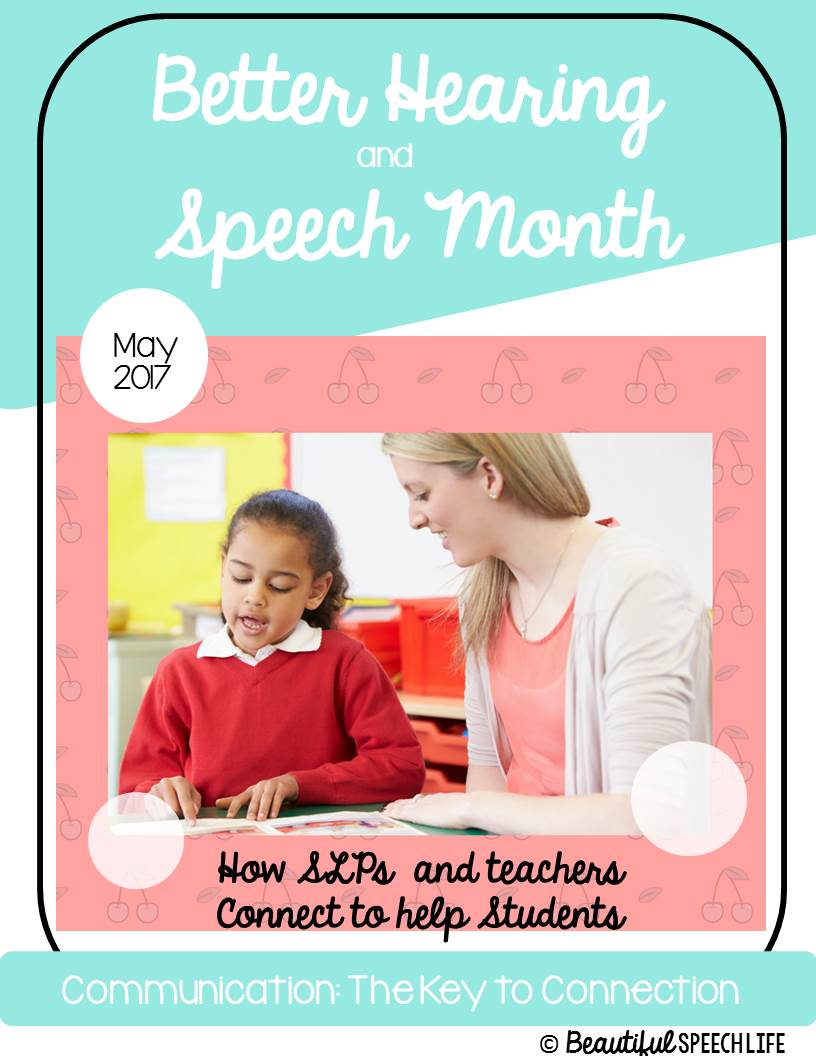
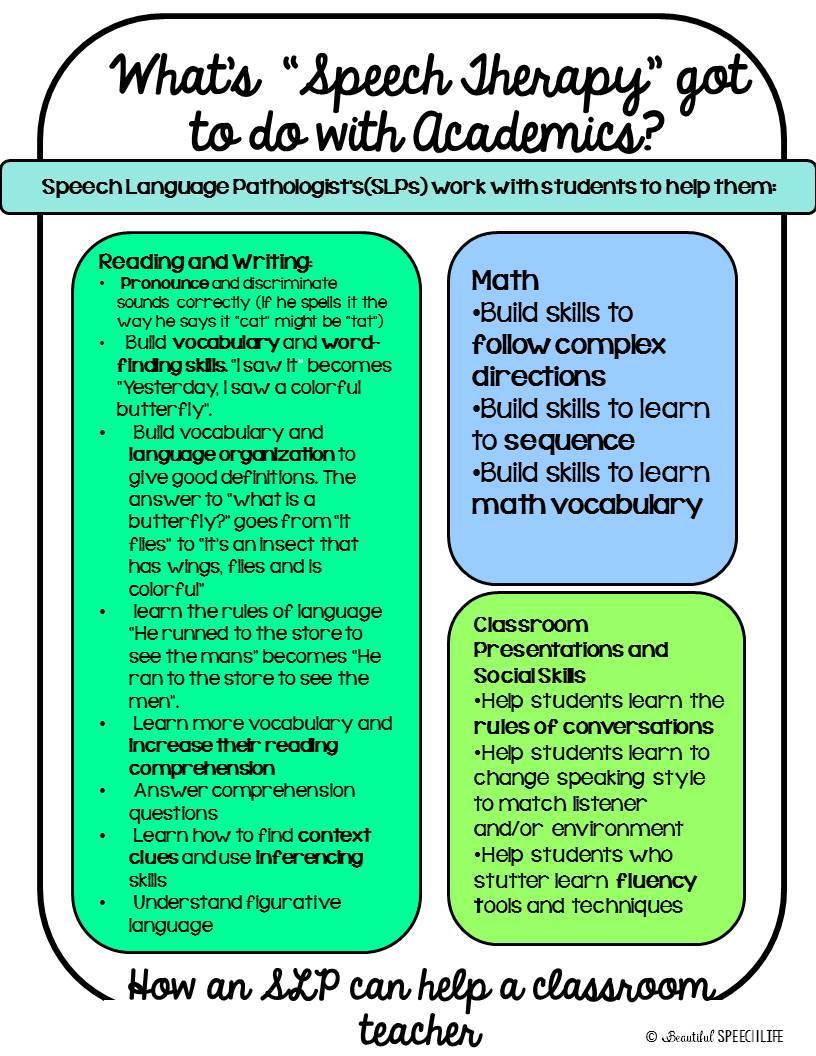
Want to do something for Better Hearing and Speech Month (every May) and don’t have time to prepare something? I’m pretty sure it wasn’t a school based SLP who decided May was the best month for this.
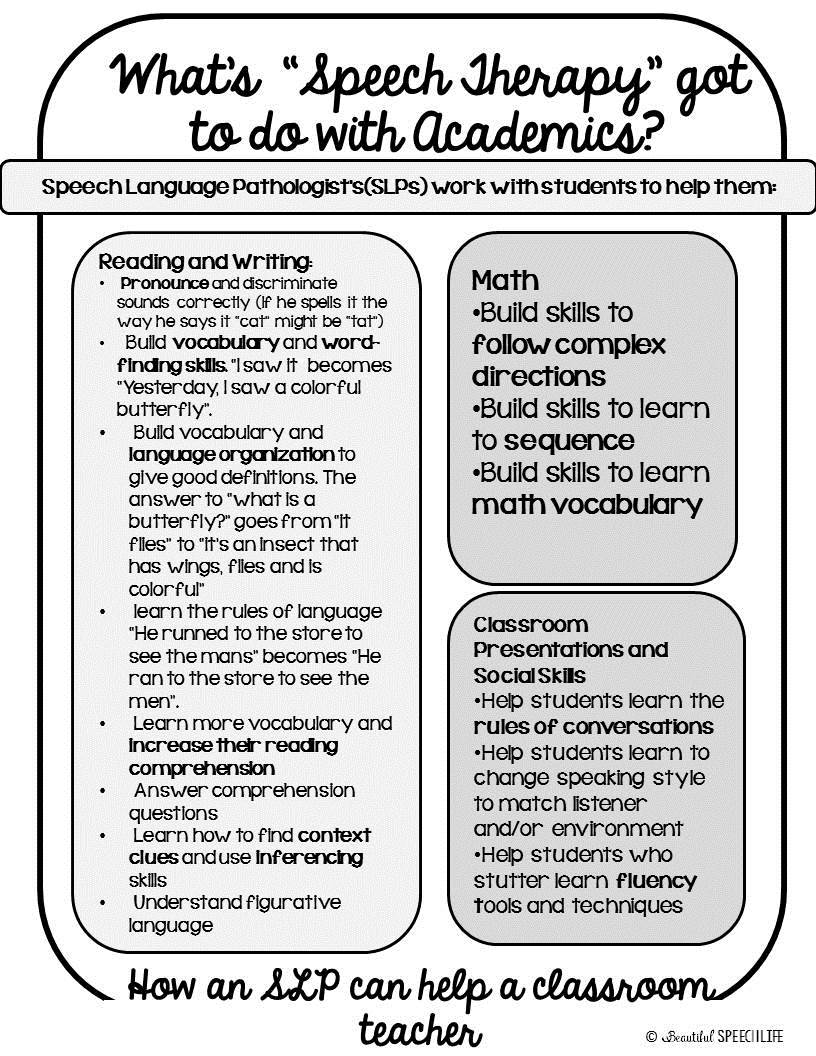
I’ve got you covered with these free handouts/posters. There’s a black & white version or four pretty color options. Use them as posters or handouts, they’re actually great all year!
Better Hearing and Speech month is the perfect time to place these posters in the staff room, on your speech room door, and anywhere else that teachers may congregate. These are actually great to use as handouts (the b&w version). They’re also great for in-service days to help new teachers understand how we can all work together.
After working in the schools for many years, I’ve noticed several common factors. Teachers are over-worked. SLPs are over-worked. Teachers have too much paperwork. SLPs have too much paperwork. Teachers want the best for their students. SLPs want the best for their students. [spacer height=”20px”]
The students who make the most progress are generally the ones who have a team behind them.[spacer height=”20px”]
The more we can work with the teachers to help our students take their newly learned communication skills into the classroom, the faster our students will have success across all environments.[spacer height=”20px”]
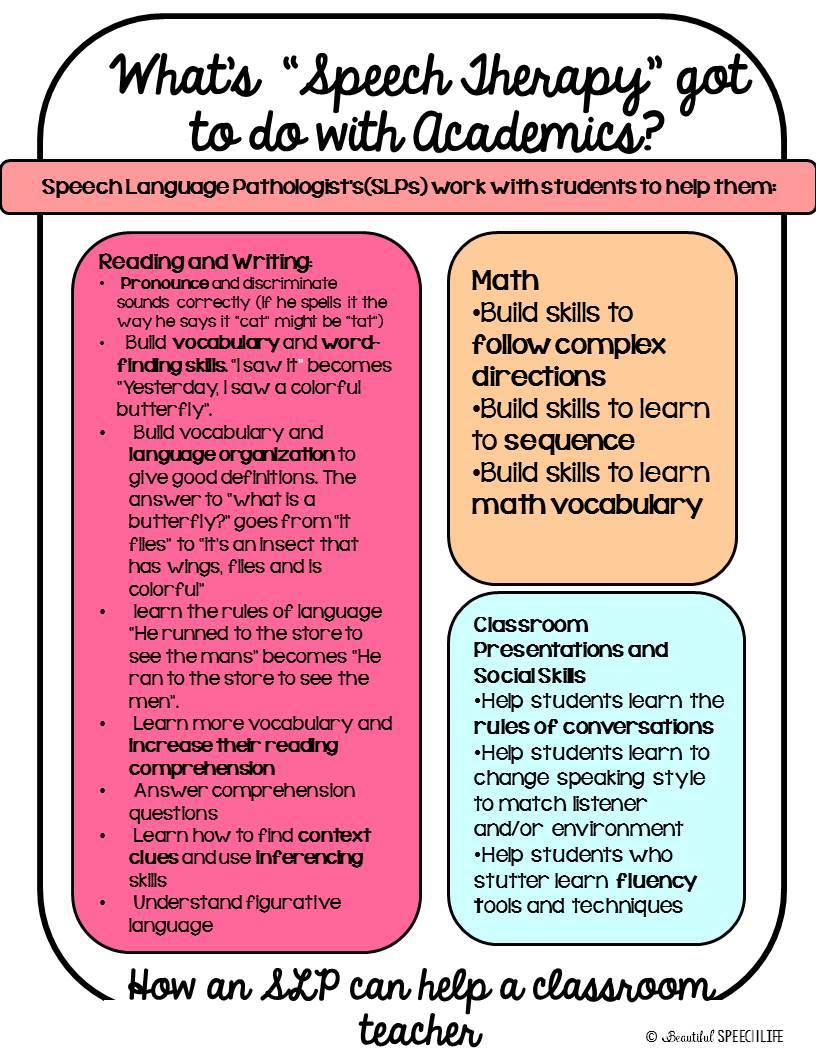
I hope these handouts will spark ideas and stimulate discussions. I know there are some great teachers our there who fully understand what a speech language pathologist does and how we can work together. I also know there are some well meaning teachers who think we “just work on articulation.”[spacer height=”20px”]
It’s our job to help bridge that gap.[spacer height=”20px”]
I hope this helps you out. Remember summer is almost here, we can do it![spacer height=”20px”]
Happy Better Hearing and Speech month,
P.S. Need a fun low-prep year end activity that will take you through at least two therapy sessions and works for multiple goals?

by Anne Page | Apr 21, 2017 | Autism
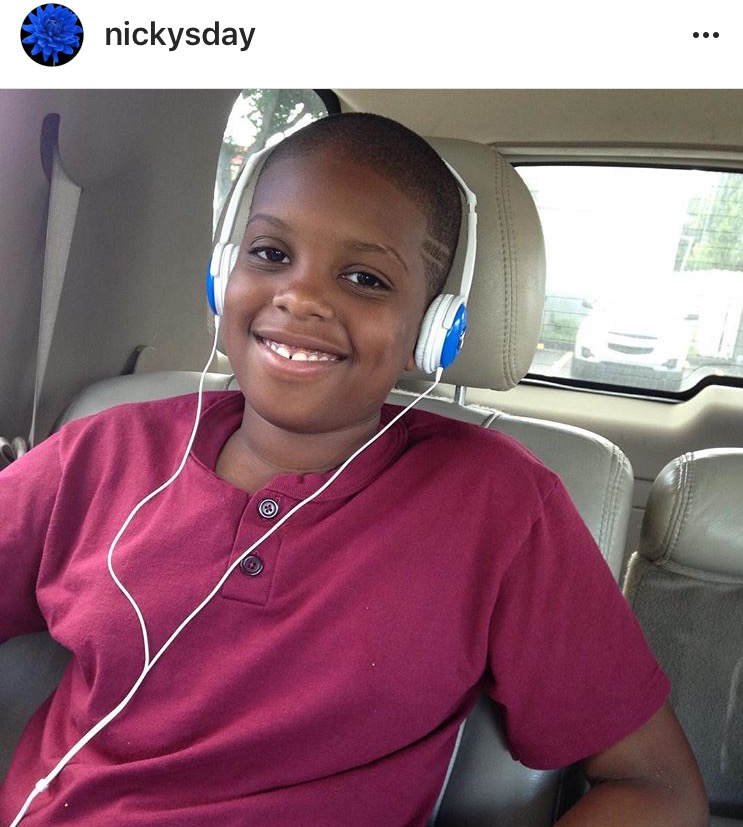
With April being Autism Awareness month, I thought this was the perfect time to do this interview. I’ve been following Nicky on Instagram for the past two years. She has an inspirational, positive feed (Nickys Day) showcasing her days as a mother of a child with Autism. Her son, MJ is 12 yrs old. I can tell from his photos that he has a loving, sweet disposition…that face!
So let’s jump right in. (I’m AP and she’s NB)
AP: Nikki it’s so great to finally speak with you, I feel like I already know you from your Instagram feed! Why don’t you go ahead and tell us why you started your blog.
NB: My son MJ is 12, he’ll be 13 in May. He’s funny sweet and loving. He’s an amazing kid. I’ll just be honest, I didn’t know a lot about autism when he was diagnosed. I’ve been blogging for two years, because now I can talk about it. I thought about how I felt and decided if I can help someone else then I’m going to do it I want to give other parents hope. There is light, they just have to hang in there.
AP: I feel like I’ve learned a lot about you listening to your interview on The Skinni podcast. There you talked about what it felt like when MJ first received the diagnosis of autism. Can you talk to us a little bit about that?
NB: The first time you hear it, you think your life is over. You think, why is this happening. I went into a shell, trying to process and accept. I let myself cry for a day and then it was time to move forward and help my son.
AP: How did you do that?
NB: I was doing research and wondered, did I miss something? But I knew I had to do what I could do. Looking back I didn’t reach out for help, I didn’t feel like anyone could understand. You feel helpless. But day by day it gets better.
AP: I am an SLP who works with many children who have autism. I’m so interested in your point of view (as a parent), about the IEP process and working with the school. Most SLPs participate in 60 to 80 IEP meetings every year. It’ll be so beneficial for us to hear what it feels like sitting on the other side of the table.
NB: This is the first thing I thought of when you asked me about doing the interview. Thinking back to when we were at MJ’s first IEP meeting…you all use a lot of terminology. Expressive, receptive, echolalia. I figured that one out because echo was in the word. But a lot of these terms were new to me. Social language, semantics, apraxia, syntax. And what does four out of 10 trials mean?
AP: I know, it’s a lot of information.
NB: MJ’s first SLP said to us, ‘he may never speak. And if he does it might not be intelligible speech.’ She explained the process well, but there was no hope.
A parent might be sitting in front of you nodding, but inside they’re thinking oh my God.
(Anne’s Note: You guys, this makes me cry! I want to make sure I offer hope and support to all the parents I work with.)
AP: As a mom, what would you like SLPs and special education teachers to know?
NB: Tell us what you actually do. We want to know what happens while you’re with our child, so we can implement it at home. I need to see it.
It’d be great to have a 20 to 30 minute training on this. Handouts explaining the terminology, so we can look at them at home. A weekly progress checklist or even a text. I know you all are busy and I know about the caseloads, I’m a middle school teacher myself.
If you don’t tell me, I don’t know. It’s not like he’s going to tell me. So many more things happen at school than they do at home. When we say our child is different at home, he really is. The MJ at school is not the MJ at home. To him school is for work, home is to relax.
You do start to feel Hope. Especially when the school shares his progress. One of MJ’s SLPs typed his first sentence and sent it to me. THOSE are the things that help you keep going.
AP: Now that MJ’s got his big 13th birthday coming up, what are your hopes for him when he goes to high school?
NB: I want him to be safe, continue to make REAL friends, improve in social skills, and continue to learn as much as he can. He’s a genuinely happy kid and I want that to continue. JOB SKILLS would be amazing as well.
I think I can speak for all of us when I say thank you to Nicky for letting us learn from her journey. I truly admire her for her candor, optimism, determination, grit and fierce love for her son.[spacer height=”20px”]
If you’d like to learn more about autism, look at these statistics from
autismspeaks.org:
- Autism now affects 1 in 68 children and 1 in 42 boys
- Autism prevalence figures are growing
- Autism is one of the fastest-growing developmental disorders in the U.S.
- Autism costs a family $60,000 a year on average
- Boys are nearly five times more likely than girls to have autism
- There is no medical detection or cure for autism
I hope you found this information helpful and inspirational. Every child needs a powerful, caring team of adults working together to empower him with education, love and knowledge.
Together we can change lives,
by Anne Page | Apr 6, 2017 | AAC, Autism, Therapy Ideas
Do you struggle with planning functional communication therapy?
Do you leave those sessions feeling frustrated and like it nothing is working?
I sure used to. And then I discovered the power of Core Vocabulary.
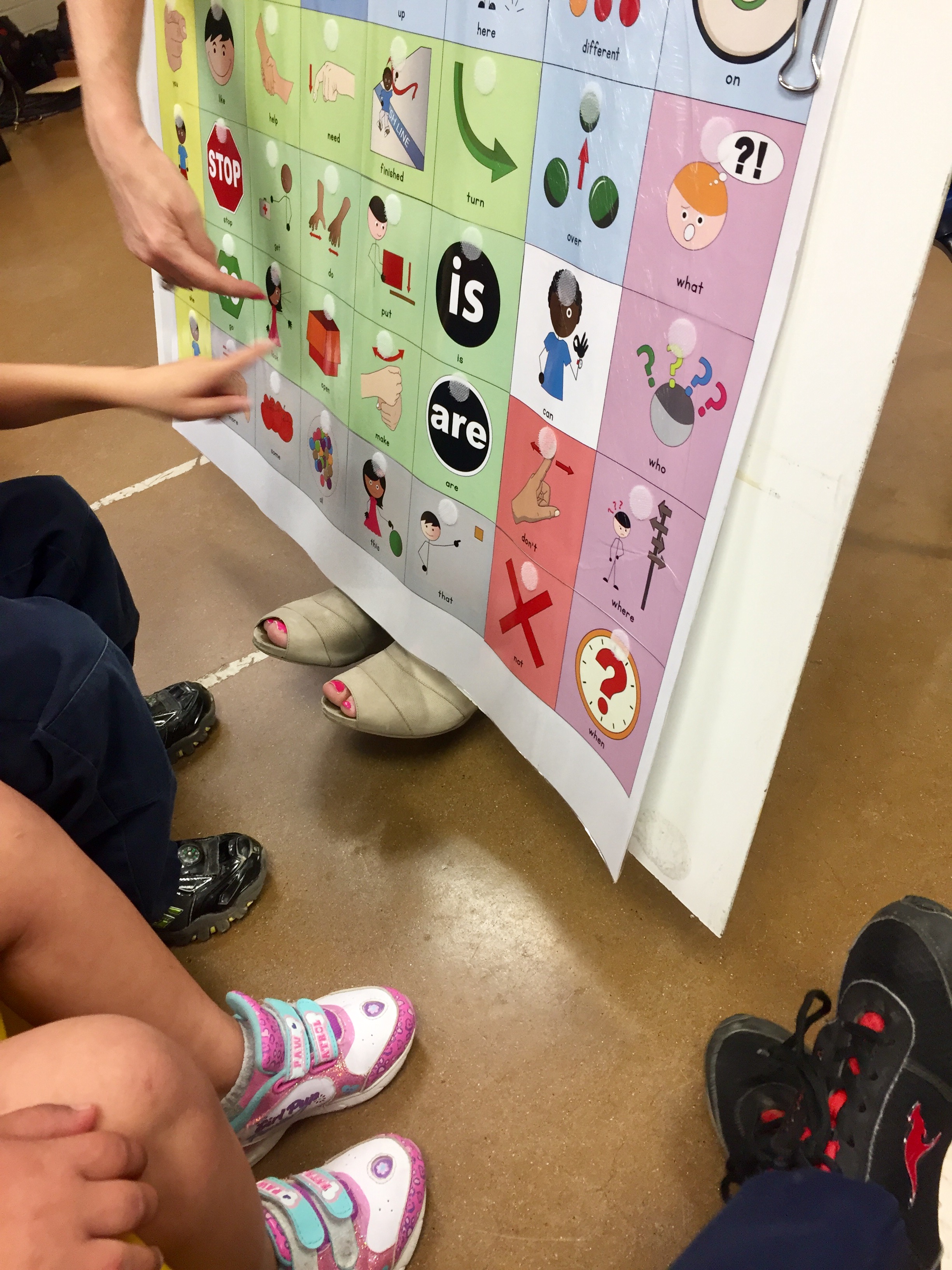
You can add structure, consistency and fun to your sessions by using Core Vocabulary. You’ll be amazed at how you can do more with less!
It’s not just for labeling. These words are used to comment, request and command.
Of course, you want students to learn many other words, these are fringe vocabulary. But by focusing on core words you are teaching them a vocabulary that is used most often throughout the day and that they can use throughout their daily lives from classroom to playground to cafeteria to home.
So what exactly is core vocabulary?
Core vocabulary is a small set of simple words, in any language, that are used frequently and across contexts (Cross, Baker, Klotz & Badman, 1997). These words make up 75-80% of the words we use every day.
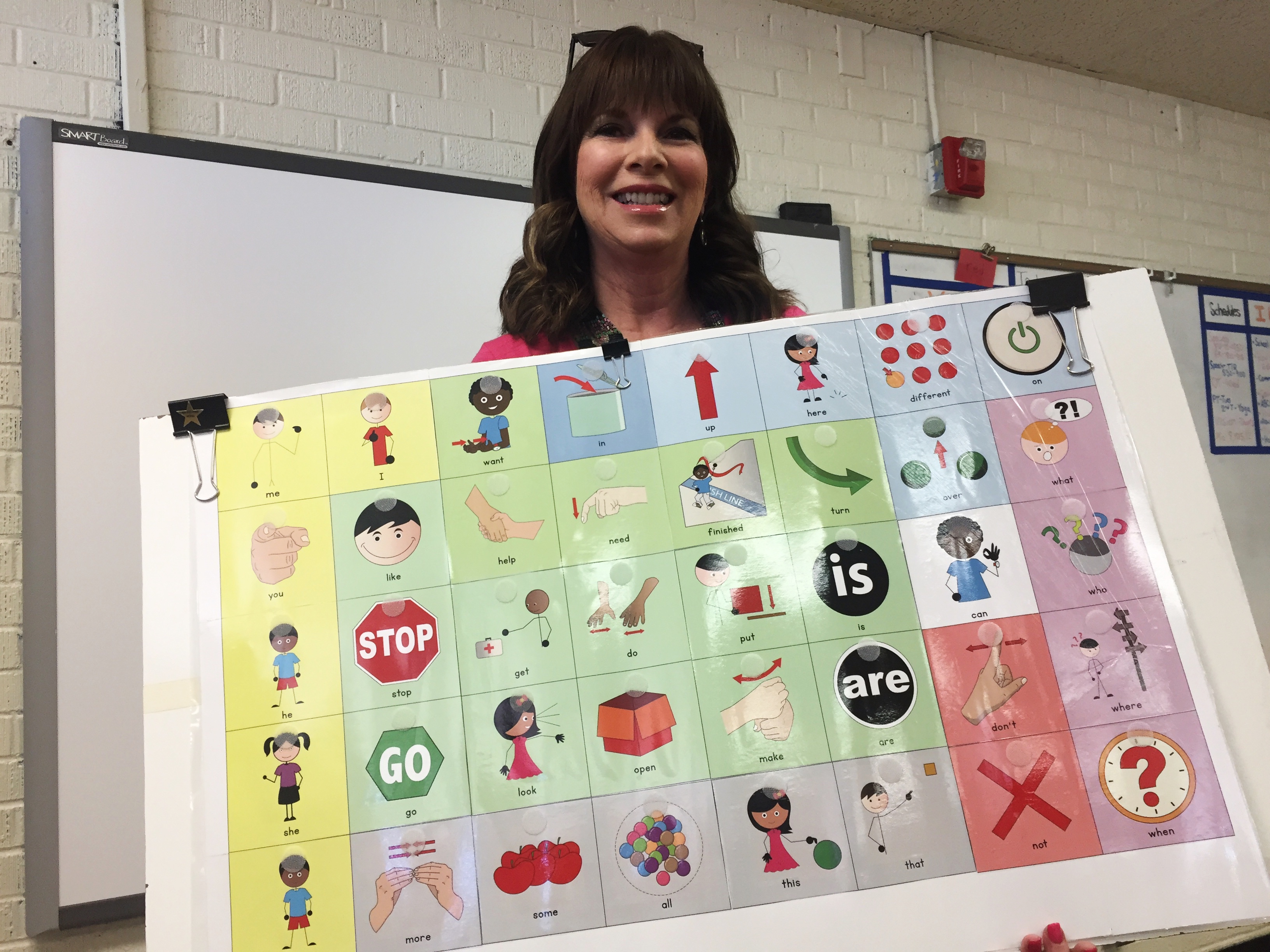
I love to use big core vocabulary boards with my students. You can choose your core words from many sources and create your own board using symbols.
I just created this core vocabulary board. I spent months tweaking the size, the positioning of the symbols and using it with my students. Here’s what I love about it:
- Big squares are easy for little hands to grasp and large enough to see clearly.
- Made for classroom and/or speech room use
- Uses DLM Core Vocabulary words which are evidence based
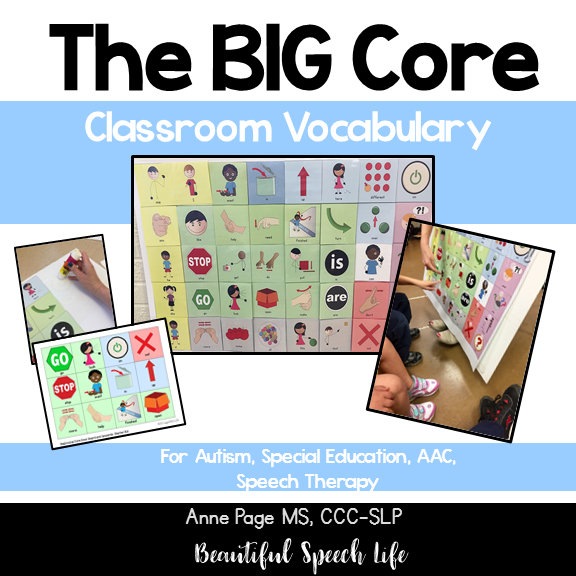
It’s available in my Teachers Pay Teachers store now. Included with the board are two different choices of backgrounds, one vibrant and one more subdued. There is also a smaller poster to put on the classroom door to help with carryover. And smaller squares to use for lanyards to encourage use of the core vocabulary words throughout the day.
If you’re sold on Core Vocabulary but wondering how to get started, I also included enough ideas to get you through a few sessions incorporating wind-up toys and movement.
Click on this link to see the Big Core Vocabulary Board.
Psssssst…April 7th only….This is at an Introductory Price of just $5.00 (I know are you kidding me? That’s a whole lotta resource, that will last a lifetime)
I hope this gives you a good start. I don’t teach core vocabulary for the whole session, but consistently work it in for 10 to 15 minutes of each 30 minute session.
Keep coming back, because I’ll be sharing more ideas on how to use core vocabulary to make communication gains. Also join me on Instagram, where I share lots of ideas in my Instastories.
I’d love to hear from you once you’ve tried this. How did it work for you? What new ideas did it generate?
Hugs and high-fives,


 Hey there I’m Anne Page. I help heart centered SLPs and educators put the fun in functional communication.